
In the modern world, meditation and mindfulness are often presented as simple tools for relaxation. We’re told to “let go,” “be present,” or “lose our ego” in a gentle, passive drift toward inner peace. The popular image is one of effortless calm, where we simply observe our thoughts and feelings as they float by like clouds in the sky.
But what if this popular understanding is missing the most crucial elements? What if the classical path to genuine, lasting happiness is not a passive exercise but an active, pragmatic, and often surprising craft? The authentic practice is less about simply letting go and more about skillfully taking hold—learning to shape the mind with the same care and ingenuity a master craftsman uses to shape wood or clay.
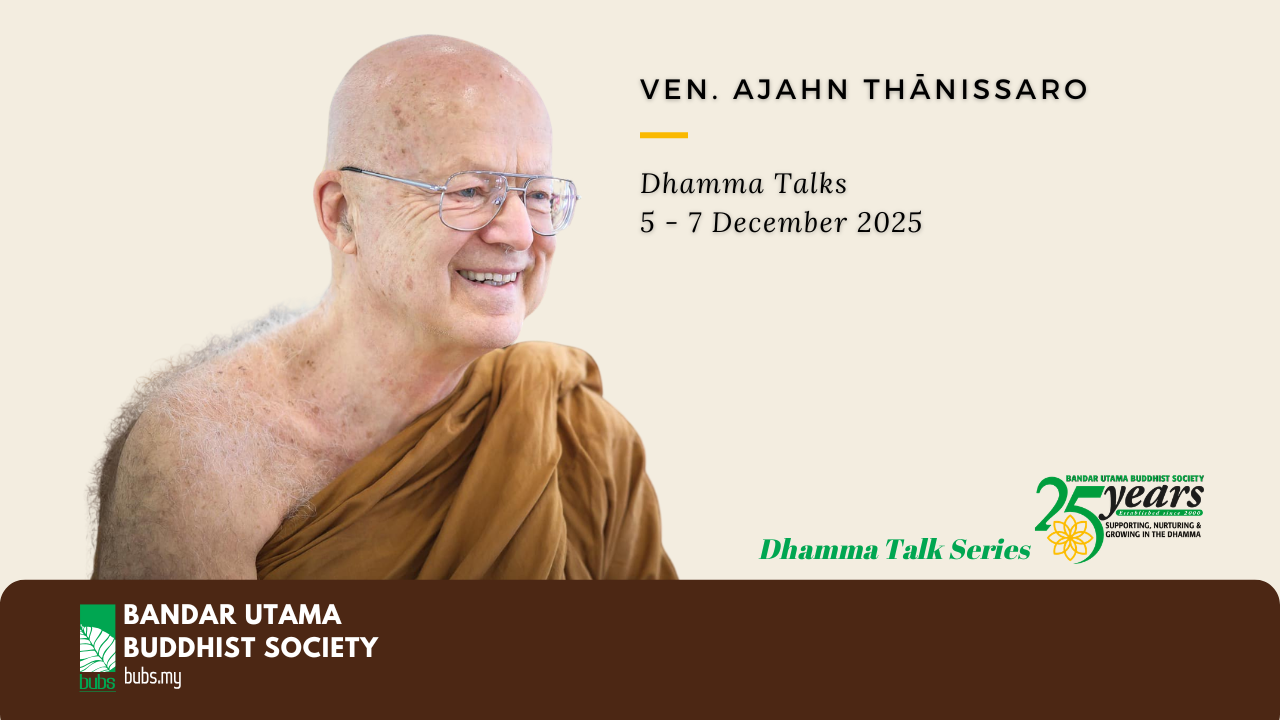
This article explores five impactful and counter-intuitive lessons from the teachings of meditation master Ajahn Thanissaro. These insights challenge the simplified narratives and reveal a path that is more strategic, demanding, and ultimately more effective than we might imagine.
1. Mindfulness Isn't Passive Observation—It's Hard Work
A common misconception about mindfulness is that it’s merely the act of noting things as they arise and pass away. This portrayal, often stemming from a partial reading of texts like the Satipaṭṭhāna Sutta, leaves out a vital ingredient that gives the practice its power: ardency.
Ardency is the focused effort of a master craftsman applied to the mind. It is synonymous with "right effort"—the conscious work of maintaining beneficial mental qualities and abandoning harmful ones. When an unskillful thought like anger arises, ardency isn't just watching it; it's actively working to get rid of it. When a skillful quality like goodwill is present, ardency means making an effort to sustain and strengthen it. Popular teachings often give a partial account, but without this active engagement—the craftsman's energy—the practice lacks the wisdom and discernment needed to make real progress.
For Ajahn Lee, the wisdom lies in the ardency. In other words, when something arises, you don't just let it go. You try to see: Is this something that should be developed? Is this something that should be abandoned? I think he's right.
2. You Need to Build a Self Before You Can Let Go of It
The Buddhist teaching of "not-self" is widely known but often misinterpreted as a command to immediately deny or annihilate any sense of self. A more strategic approach is to first cultivate a skillful sense of self. A craftsman doesn't begin a project by throwing away their tools; they develop and refine them. In meditation, the self becomes a set of indispensable tools for the path.
This aligns with the Buddha's teaching on the "four bases for success"—a framework for mastering any skill: desire, persistence, intent, and discernment. To put these into practice, we must consciously develop three functional roles for the self:
The Consumer: This self understands it will benefit from the practice. It embodies desire (chanda), providing the motivation to continue by recognizing that the effort will lead to true happiness.
The Agent: This self takes responsibility and believes, "I can do this." It embodies persistence (viriya), committing to the practice and doing the necessary work.
The Commentator: This self observes what you’re doing, judges the results, and offers constructive feedback. It embodies discernment (vīmaṃsā), asking, "Is this working?" and advising on how to adjust your efforts.
By developing these functional selves, you create the very toolkit that powers you along the path.
So don't be too quick to throw away your sense of self. Learn how to develop it. That's the first lesson of wisdom that you learn from trying to abandon unskillful qualities and develop skillful ones.
3. You Learn About Reality by Experimenting, Not Just Watching
Meditation is often framed as a way to see "how things really are," as if you are a neutral spectator. A more accurate understanding is that it teaches you "how things function"—how cause leads to effect, particularly within your own mind. You learn about your material not by looking at it, but by working with it.
Ajahn Thanissaro uses the analogy of eggs on an assembly line. You can watch them go by all day and learn very little. But if you take those eggs and start cooking—boiling, steaming, making omelets—you learn a great deal about them. You learn that one action produces one result, while a different action produces another. This is precisely how a craftsman learns their trade. The Dharma is nourished by this same active loop of commitment and reflection: you commit to an action (like adjusting your breath) and then you reflect on the results (does this lead to more or less calm?). This active, experimental process is the engine of insight.
And you can look at something and just look at it coming and going, coming and going. And you can learn a little bit about it, but not much. It's like watching eggs go down an assembly line... when you work with them, when you experiment with them, that's when you learn. You learn that when you do this, you get that result. You do that, you get this result.
4. Sometimes a "Lesser Evil" Is Your Best Tool
The path of meditation is not always an idealistic pursuit of perfect wholesomeness. It is profoundly pragmatic, demanding the strategic ingenuity of a craftsman who knows how to use the tools at hand. One of the most surprising teachings is that when a skillful quality is out of reach, you can use a less unskillful quality to overcome a more harmful one.
The classic example involves intense anger. Suppose someone has made you so furious that generating goodwill feels impossible. In this moment, you can employ a different, less wholesome quality: spite. You can ask yourself, "If I act on this anger, I'll do something stupid that will please my enemy. Do I want to please them?"
The answer, driven by spite, is "No." This thought acts as a brake, preventing you from acting on the more destructive rage. While spite is not a skillful quality in itself, it is strategically employed as a "lesser evil" to prevent a greater harm. This demonstrates the non-idealistic, highly tactical nature of the practice, teaching the wisdom of strategy.
Now spite is not a skillful quality, but relative to the anger, it's going to help you keep the anger in check. So this is how you learn how to think strategically. Better to be spiteful than to say something stupid out of anger.
5. Taking Care of Yourself Is How You Take Care of Others
As the external world becomes "a more and more unfriendly place," the need for an independent source of happiness within grows ever more urgent. If our well-being depends on fragile external conditions, we are left vulnerable. This focus on cultivating inner resources is often mistaken for selfishness, creating a false dichotomy between helping ourselves and helping others.
The Buddha dissolved this conflict with a simple and powerful analogy: two acrobats on a tall pole. One acrobat stands on the pole while the other stands on their shoulders. The first says, "You look after me, and I'll look after you." But the second wisely replies, "No, that won't work. I have to look out after myself, and you look out after yourself. That way, we both protect each other and come down safely."
An acrobat cannot maintain your balance for you. By focusing on your own internal stability—the craftsman ensuring their own footing is solid before beginning their work—you make it easier for those around you to maintain theirs. Your centeredness and well-being directly benefit everyone you interact with. This is the practical foundation of true compassion.
A Path of Skillful Craft
These five takeaways paint a picture of a spiritual path that is far from a passive drift toward bliss. It is an active, intelligent, and skillful craft. It requires effort, strategy, and a willingness to experiment with the raw material of your own mind.
The teachings remind us that progress isn't about blindly "letting go" of everything at once. The practice is more like climbing a ladder: you hold firmly to one rung—an attachment, a skillful tool—until you have a secure grasp on the one above it. This is a strategic ascent, not a leap into the void. As the source text notes, if there were a foolproof method, "every fool would be awakened." The journey requires us to become more observant of our actions and their results, and to use our ingenuity to find what works.
As you reflect on your own inner work, where might a little more active ingenuity and skillful effort make all the difference?