

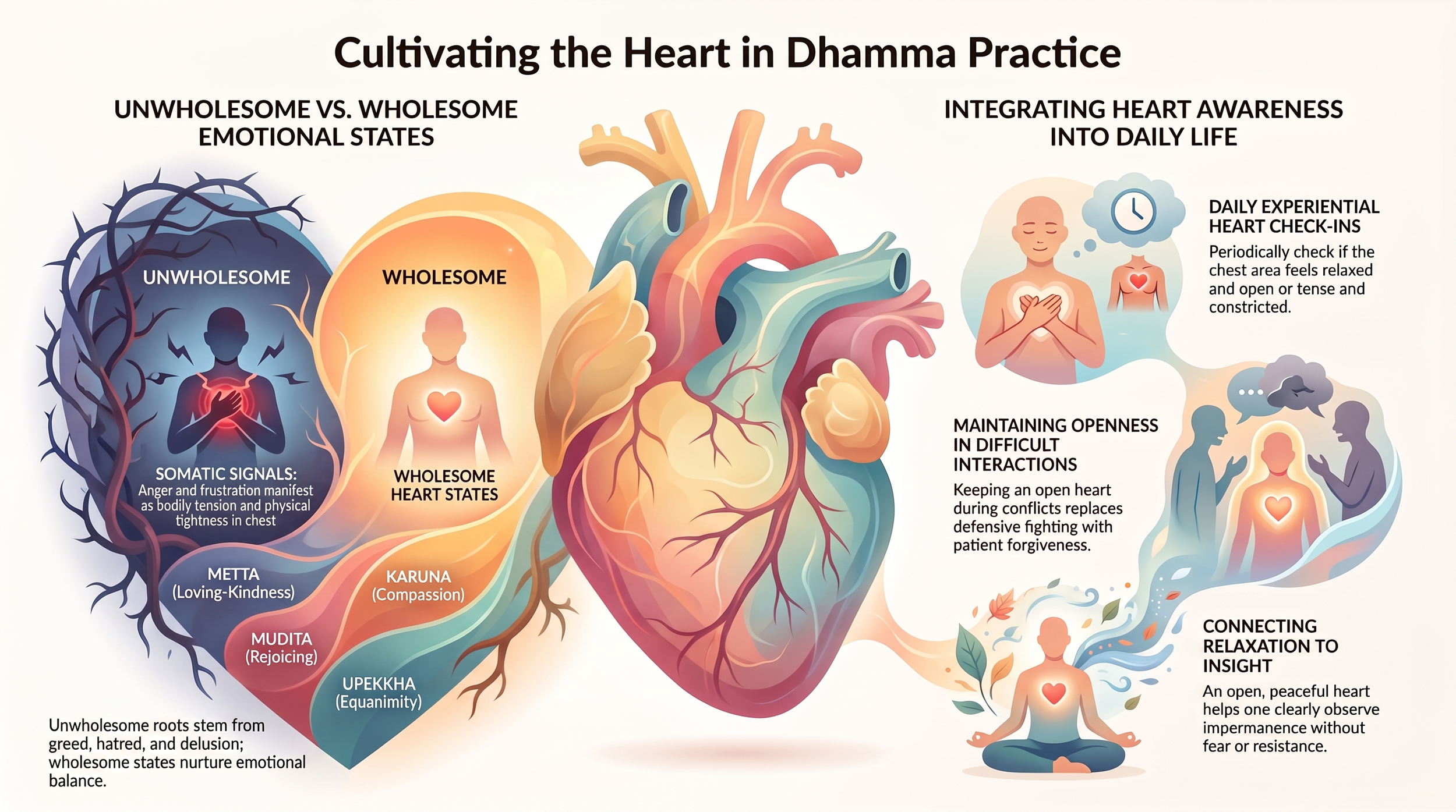
On 18 Oct 2026, Ven. Vimuttadhammika explores the vital connection between wholesome emotions and daily Dharma practice, emphasising how cultivating positive states like loving-kindness, compassion, gratitude, and forgiveness can transform both inner peace and interpersonal relationships. The speaker explains that while unwholesome emotions such as greed, hatred, delusion, and anger create physical tension and hinder clear communication, recognising these sensations allows individuals to release them and open their hearts. Through guided reflection and meditation, practitioners learn to detect constriction in the chest and replace it with emotional balance and warmth. Personal anecdotes, including resolving tensions with his parents prior to ordination and turning an aggressive restaurant manager into a supportive ally, illustrate how maintaining an open, forgiven mindset diffuses conflict. Ultimately, nurturing these emotional qualities creates the mental stability required to deeply understand core Buddhist truths, such as impermanence, through manageable, daily mindfulness habits.
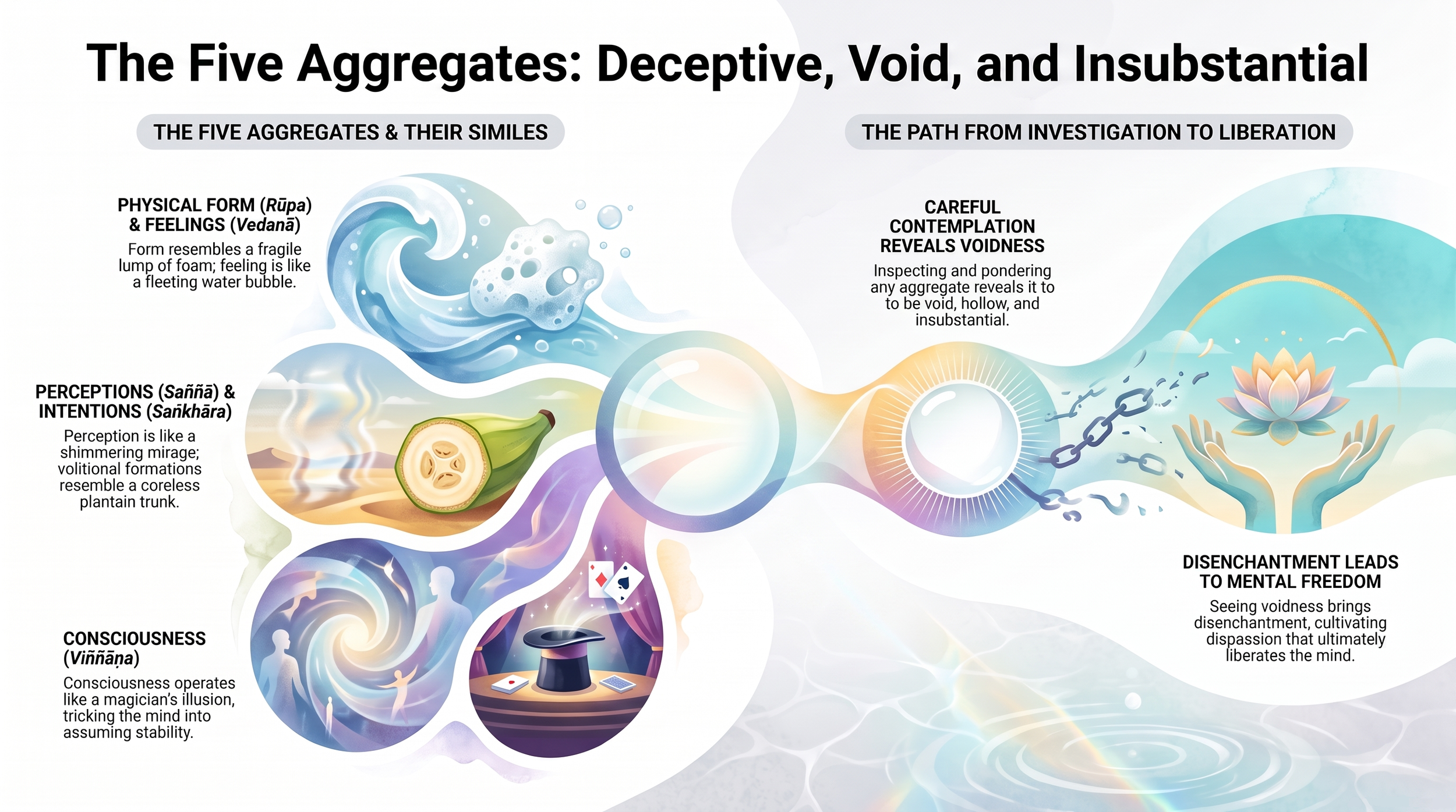
On 13 Oct 2026, Ven. Anuvidita explained the Buddhist concept of the five aggregates, which outline the fundamental reality of human existence. Through a traditional discourse known as the Lump of Foam Sutta, these components are compared to various fragile phenomena to illustrate their transient nature. Specifically, form is likened to river foam, feelings to water bubbles, perceptions to mirages, volitional formations to plantain tree trunks, and consciousness to magical illusions. By carefully investigating these aspects, practitioners can recognise their hollow and insubstantial qualities rather than viewing them as solid or permanent. Ultimately, understanding this illusory framework fosters disenchantment and detachment, leading the mind toward liberation and the cessation of suffering.
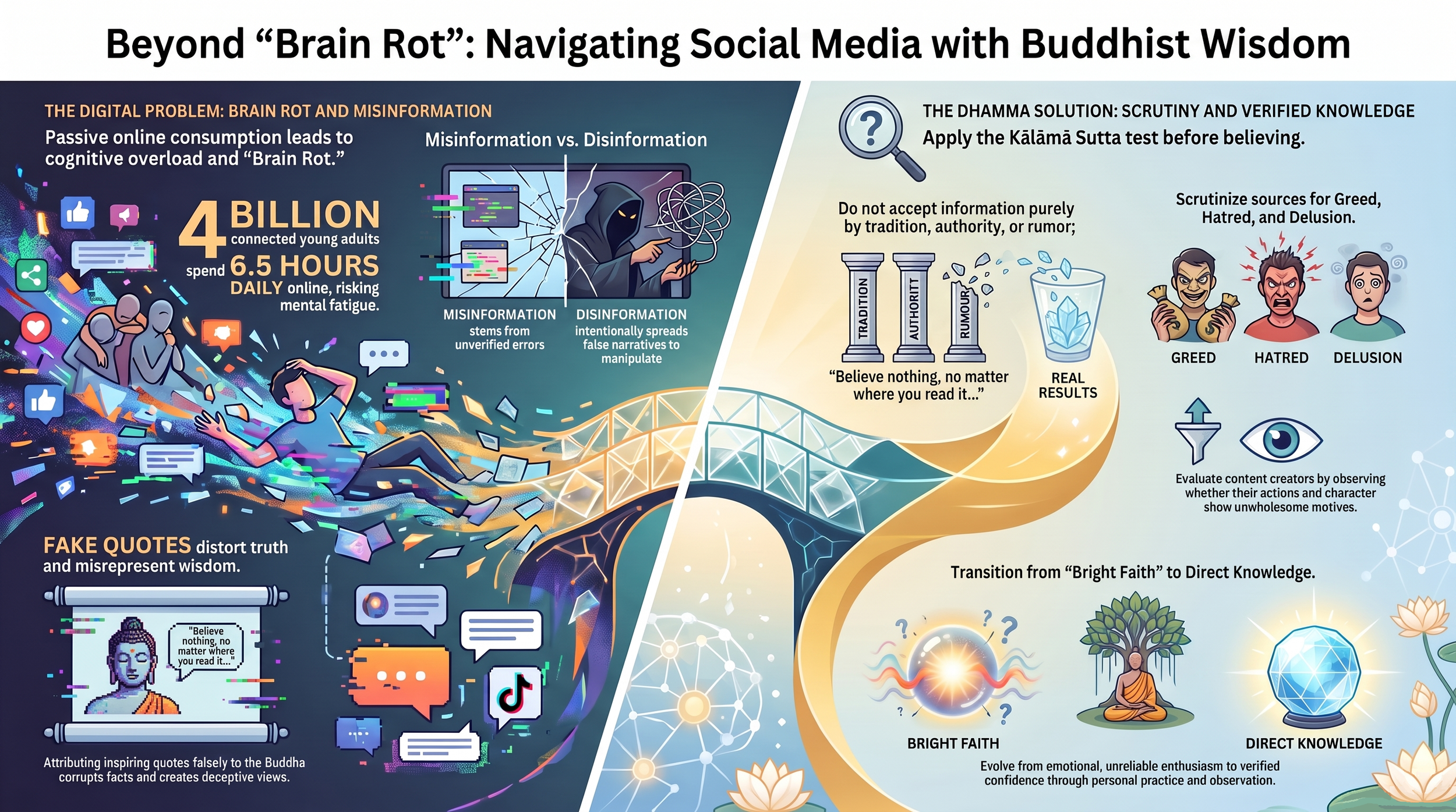
On 11 Oct 2026, Bro. Ananda Fong examines the dangers of blindly trusting information encountered on social media, connecting modern digital susceptibility to historical manipulation and the spread of unverified misinformation. He argues that excessive online consumption leads to brain rot, characterized by anxiety, fragmented attention, and diminished intellectual wellbeing. Drawing heavily upon Buddhist teachings, the speaker contrasts passive faith with active scrutiny and verification, emphasizing that individuals should personally test ideas rather than accept them at face value. Furthermore, it highlights that the Dhamma-Vinaya serves as a practical path for self-transformation, promoting mindfulness, moral conduct, and rational investigation over dogma. Ultimately, the discourse encourages people to pause and reflect critically on digital content to protect themselves from psychological distress and digital deception.
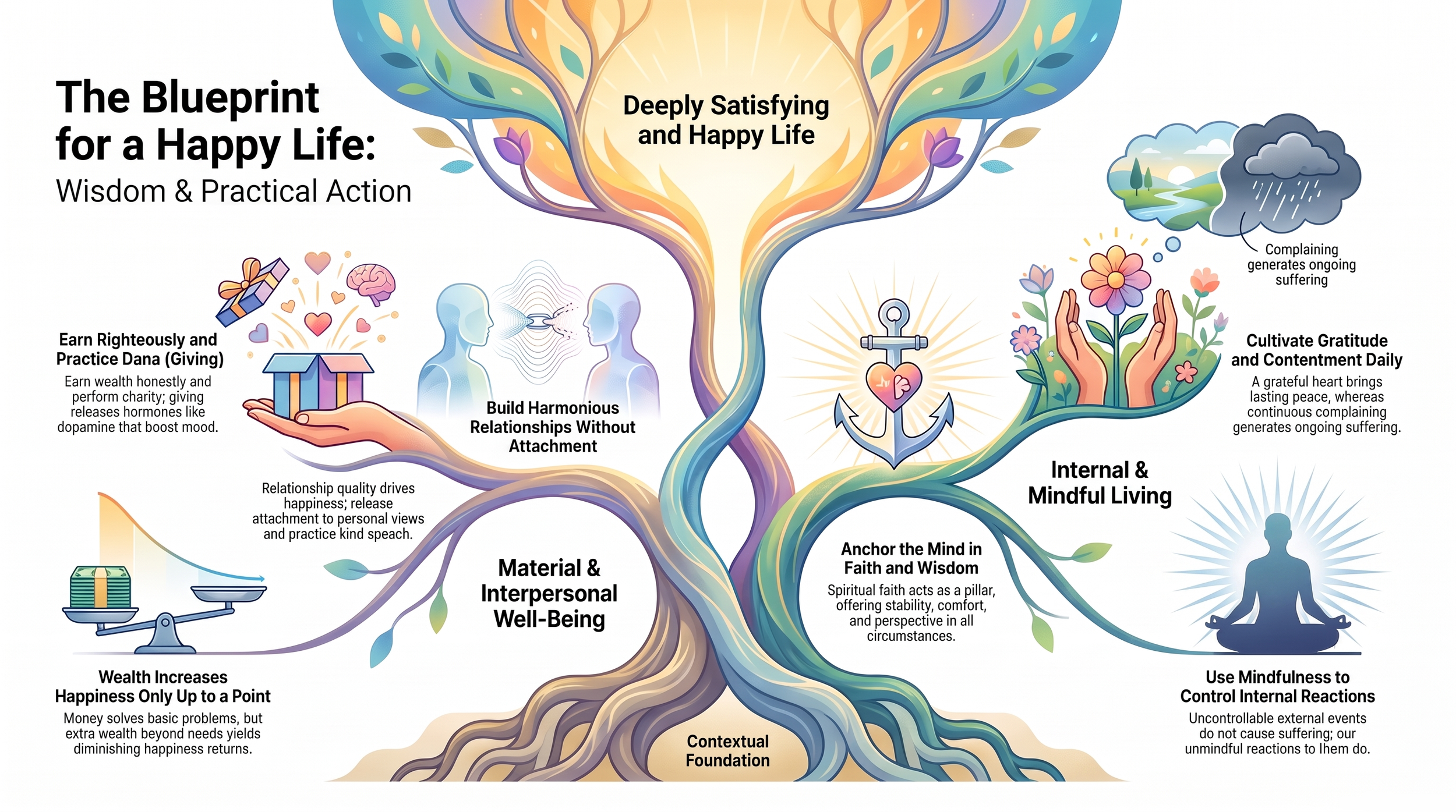
On 4 Oct 2026, Dato Ang presented that global research and traditional Buddhist teachings intersect to reveal that material wealth, interpersonal relationships, and spiritual faith serve as the primary pillars of human well-being. While external factors like advancing age and gender remain beyond personal control, individuals can cultivate genuine contentment by earning honestly, practising mindful communication, and letting go of rigid personal opinions. Ultimately, the core purpose of this discourse is to demonstrate that achieving a truly joyful life relies not on endless material accumulation, but rather on unconditional generosity, inner wisdom, and harmonious connections with others.
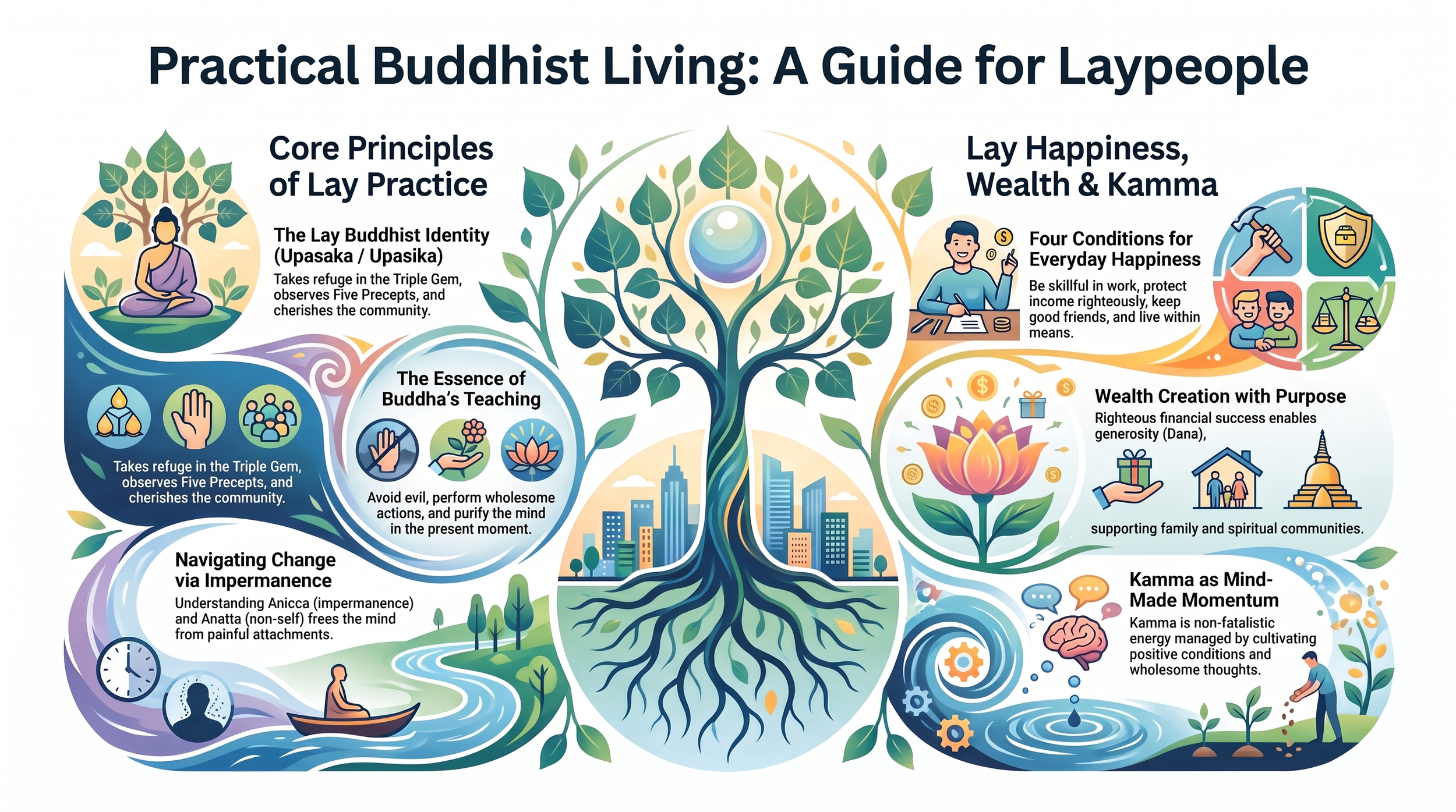
On 27 Sept 2026, Datuk Charlie explores the concept of Practical Buddhist Living, specifically tailored for laypeople who navigate worldly desires, careers, and family responsibilities rather than seeking total renunciation. The speaker argues that the Buddha’s teachings are not just for monks but offer a symbiotic relationship where successful, wealthy disciples support the religious community while receiving spiritual guidance on managing life’s vicissitudes of gain and loss. By understanding core principles like impermanence (Anicca) and non-attachment, individuals can cultivate a peaceful and contented mind that remains resilient amidst the inevitable changes of health, wealth, and status. He emphasises self-reliance through the Noble Eightfold Path, encouraging practitioners to integrate ethics and mindfulness into their modern vocations to achieve a balance of health, wealth, and emotional wellness. Ultimately, the purpose of the discourse is to redefine Buddhism as an experiential and accessible philosophy centred on doing good, avoiding evil, and purifying the mind in the present moment.
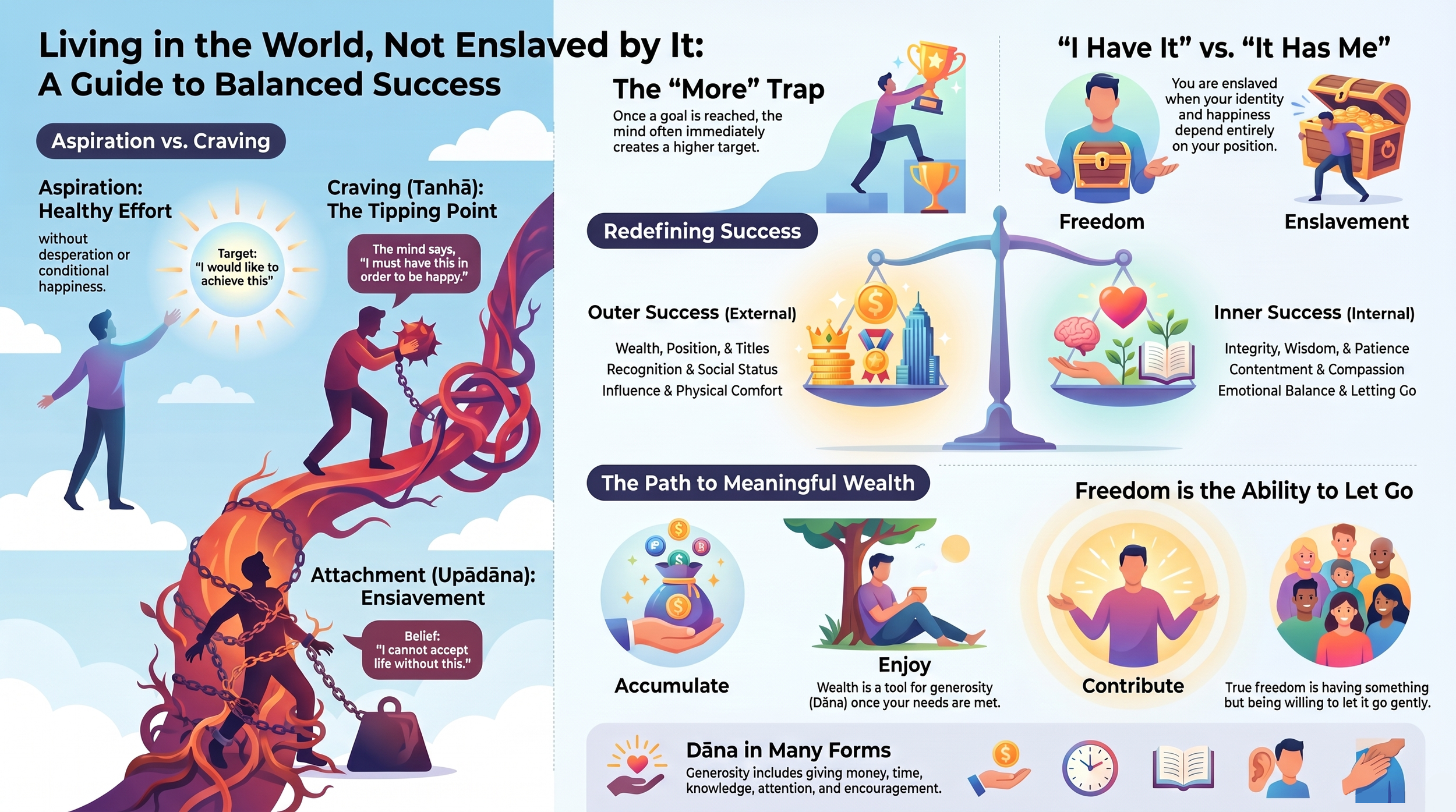
On 20 Sept 2026, Bro. Mitra Chong explores the Buddhist perspective on balancing worldly success with inner peace. While acknowledging that aspirations for wealth, career advancement, and family harmony are natural for laypeople, the talk highlights the danger of craving, which occurs when one’s happiness becomes entirely dependent on external results. True suffering arises not from having possessions or titles, but from being enslaved by them and defining one's worth through temporary status. By shifting from a mindset of constant accumulation to one of gratitude and contribution, individuals can enjoy life’s comforts without the fear of losing them. Ultimately, he encourages a balanced life where outer achievements are anchored by inner success, such as integrity, wisdom, and the ability to let go.
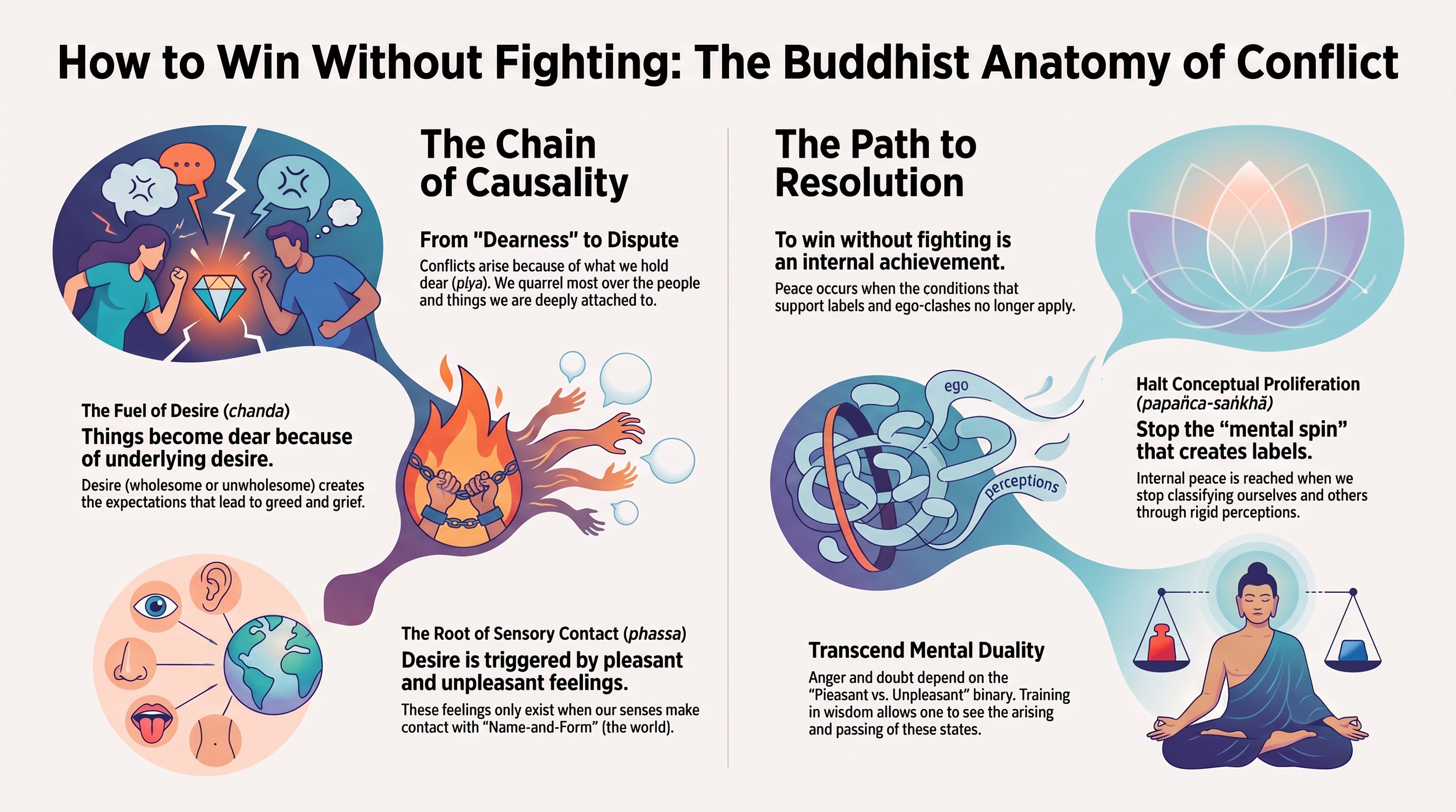
On 13 September 2026, Ven. Dr. Chandima presents a Dhamma talk on the wisdom of the Kalahavivāda Sutta (Sn 4.11) to uncover the psychological origins of human conflict. The teaching identifies a chain of causality where quarrels and disputes arise from our attachment to dear people and things. These attachments are fundamentally rooted in desire, which serves as the primary engine for greed and expectation. According to the text, this desire is ultimately triggered by our subjective reactions to pleasant and unpleasant feelings. By understanding these internal mechanisms, individuals can find the wisdom to overcome the roots of friction within themselves. The final goal is to achieve a higher victory by resolving the internal states that lead to external suffering.
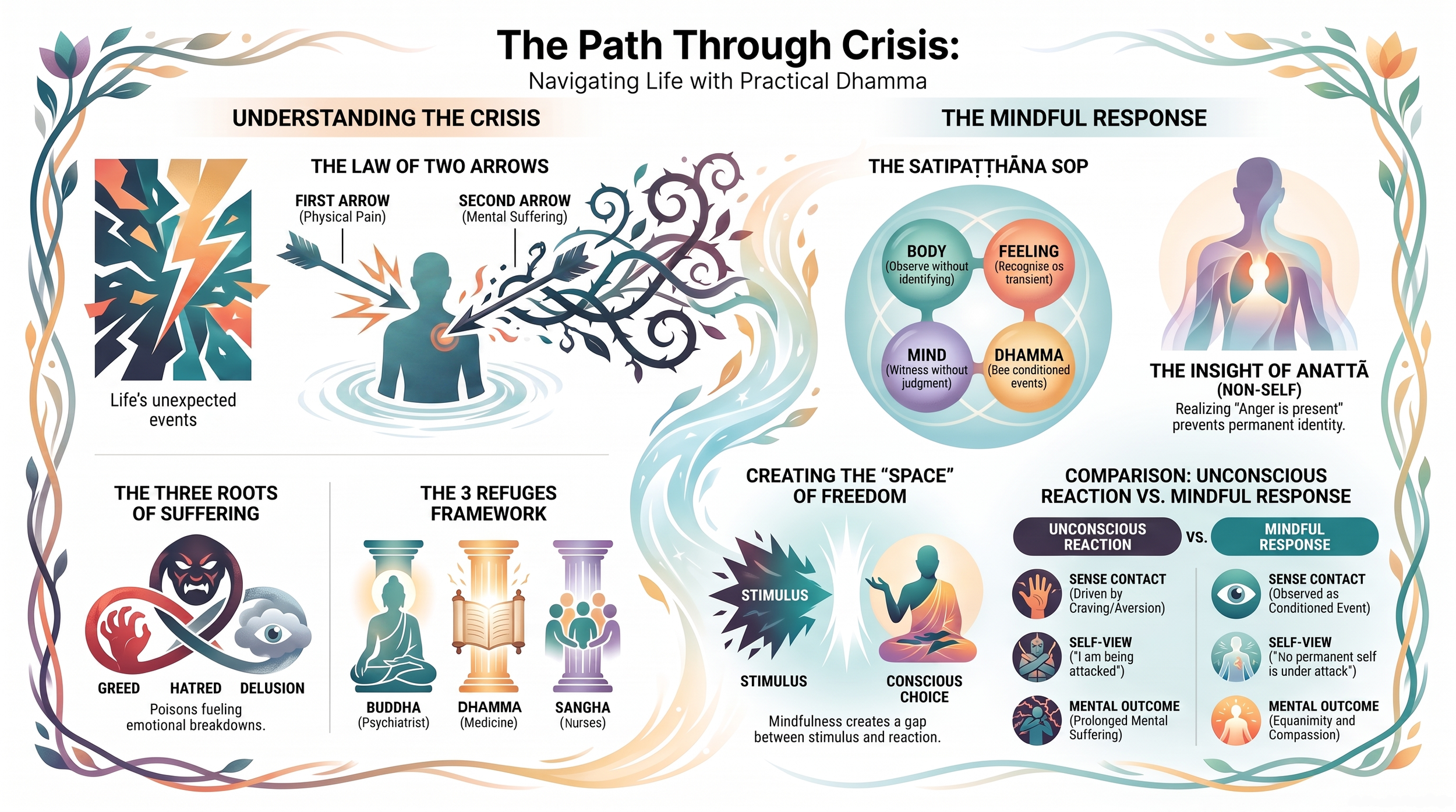
On 9 Aug 2026, Dr Wong Teck Wee explores how to navigate life's inevitable crises by applying Practical Dhamma and the principles of mindfulness. He defines a crisis as a destabilising turning point that disrupts our sense of control, yet suggests these challenges can be transformed into opportunities for resilience and growth through spiritual tools. Central to this journey is the Satipaṭṭhāna practice, which involves the Four Foundations of Mindfulness—observing the body, feelings, mind, and mental patterns to create a necessary gap between a stimulus and our reaction. By investigating the Three Marks of Existence—impermanence, suffering, and non-self—practitioners learn that difficult emotions like anger or worry are merely conditioned phenomena rather than permanent identities. Ultimately, Dr. Wong advocates for the Noble Eightfold Path as a practical "prescription" to move from an unconscious, automatic life toward a state of equanimity and freedom mirrored by the enlightened Arahant.
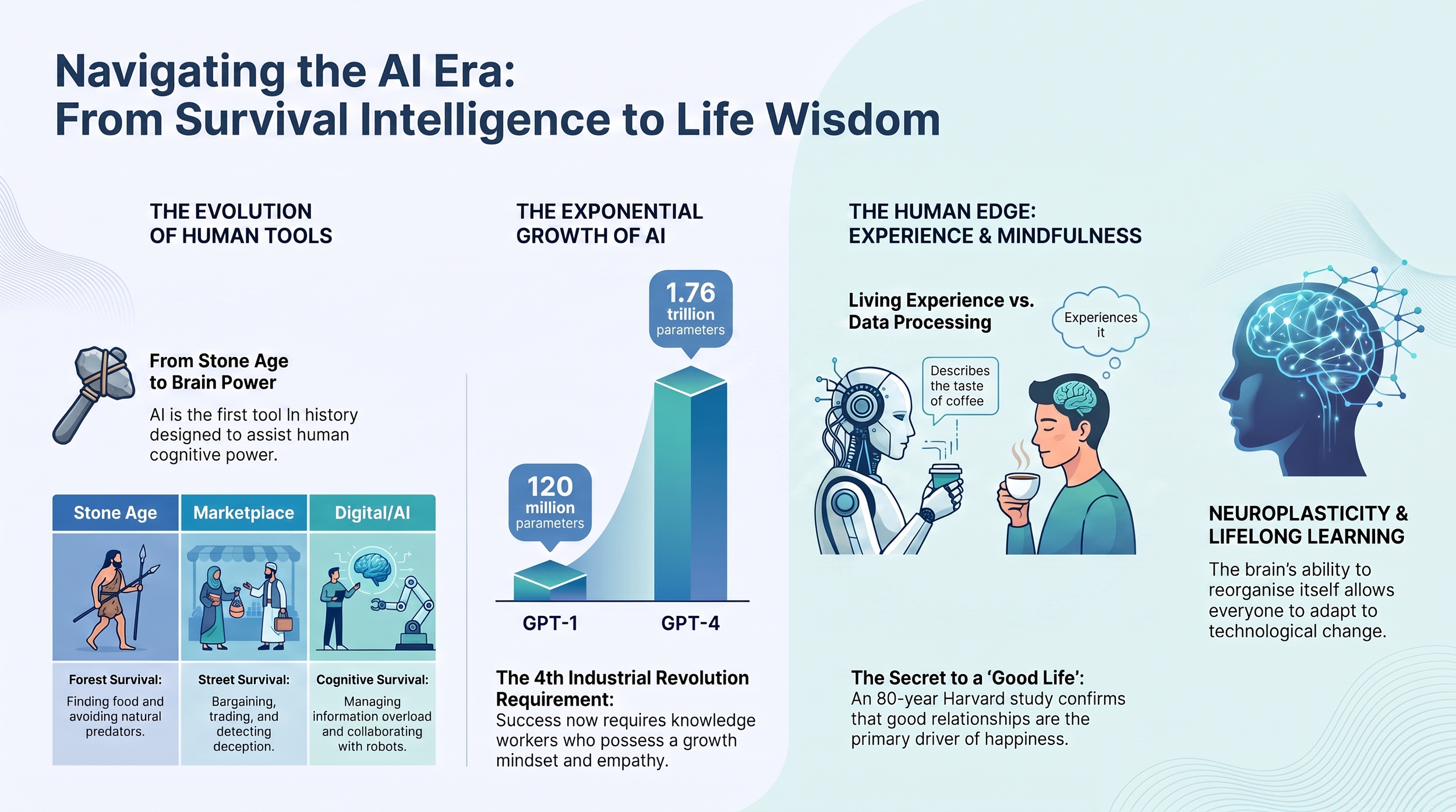
On 2 Aug 2026, Prof. Ewe explores the interplay between human neurology and artificial intelligence, specifically focusing on how tools like ChatGPT impact cognitive development. While the human brain possesses remarkable neuroplasticity through trillions of neural connections, research suggests that over-reliance on automated text generation can lead to reduced brain engagement and weakened critical thinking skills. Comparative studies indicate that individuals who rely solely on their own mental faculties demonstrate higher neural connectivity and superior long-term performance in creative and semantic tasks. Furthermore, Prof. Ewe highlights that mental focus is a key component of well-being, as a wandering mind is often linked to decreased happiness. Ultimately, he underscores the necessity of ethical education and lifelong learning to maintain human intelligence and wisdom in an increasingly automated world.

On 26 Jul 2026, Ajahn Noom gave a Dhamma talk exploring the nature of suffering and the importance of positive perception in Buddhist practice. The teaching differentiates between the universal, unavoidable characteristics of impermanence and the mental anguish described in the Four Noble Truths, which stems from a refusal to accept reality. Using various parables—such as an injured king and a girl with a disability—the speaker illustrates how a positive mindset can transform one's experience of hardship. He encourages the audience to stop focusing on personal deficiencies or the flaws of others and instead recognise the vast "white background" of goodness present in life. Ultimately, Ajahn highlights that while external circumstances are often beyond control, individuals can find lasting happiness by training their minds to accept the world's shifting nature.
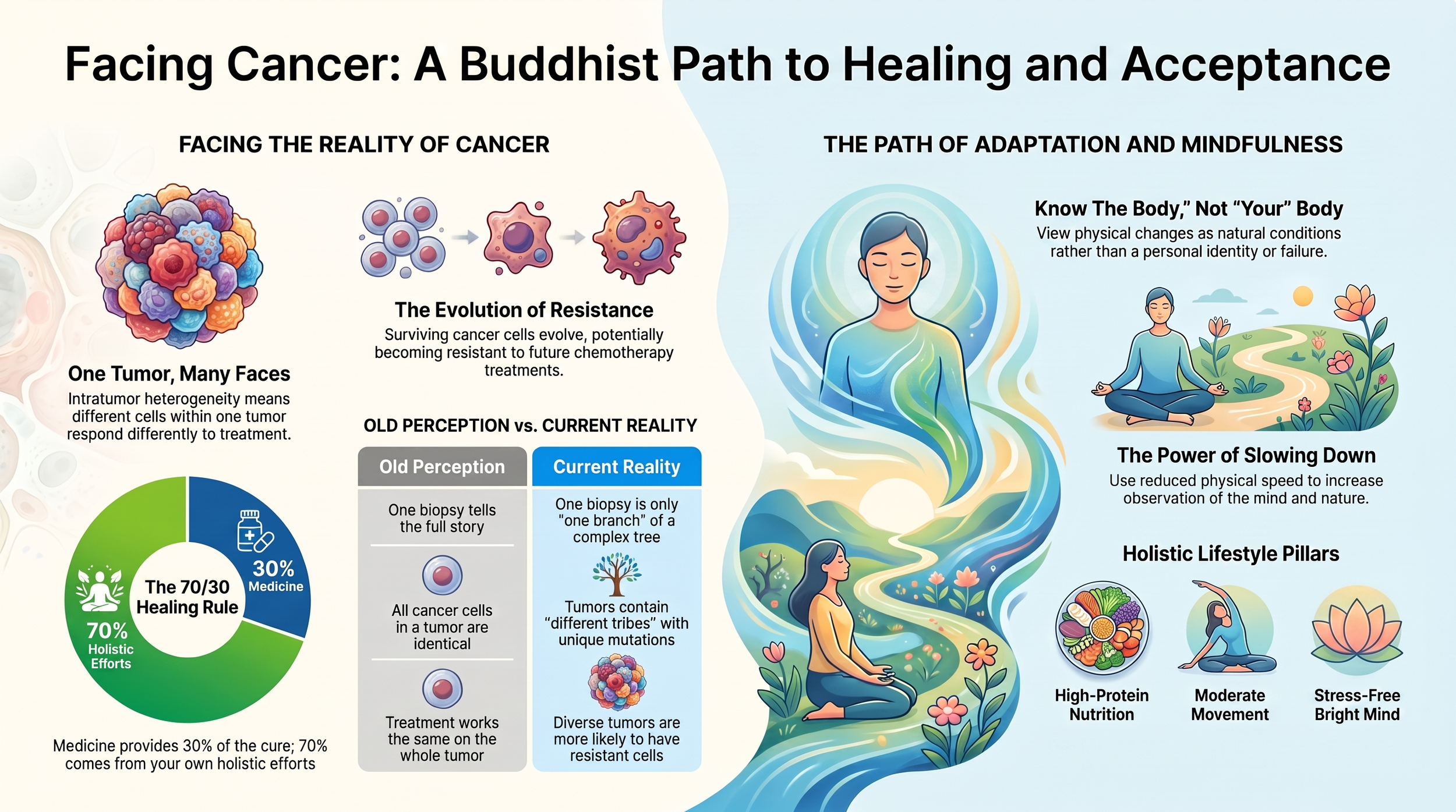
On 5 Jul 2026, Bro. Kooi Fong shares his personal journey of facing a colon cancer diagnosis by integrating medical realities with spiritual wisdom. The narrative moves from the initial shock of discovery to a deep dive into the scientific facts of cancer, such as intratumour heterogeneity and clonal evolution, which he uses to dismantle false hopes and promote realistic acceptance. Central to his recovery is the Buddhist concept of "knowing the body"—observing physical changes without ego-attachment—and practicing slowing down to cultivate mindfulness during the rigours of surgery and chemotherapy. By adopting a holistic treatment approach that balances nutrition and exercise with a light and bright mind, he illustrates how the principles of cause and effect (Paticcasamuppada) allow a patient to transform a life-threatening illness into a profound opportunity for Dhamma practice. Ultimately, his experience serves as a guide for maintaining mental stability and loving-kindness amidst physical decay, highlighting the use of ethical AI tools and community support to navigate the vulnerability of terminal uncertainty.

On 28 June 2026, Dr. Alvin Ng, a clinical psychologist, explores Engaged Buddhism as an active method for improving mental health through the integration of Buddhist principles and Cognitive Behaviour Therapy (CBT). He argues that rather than focusing on the passive nature of the five precepts, practitioners should proactively engage in positive behaviours like generosity (dana) and friendliness (metta). By adopting the "5Gs of Happiness"—greeting, giving, gratitude, glorifying skillfulness, and giggling—individuals can build an emotional bank account of joyful memories to combat future suffering. Dr. Alvin emphasises that mindfulness serves as a vital tool for catching automatic negative thoughts and replacing them with rational, compassionate perspectives. Ultimately, he advocates for behavioural activation, encouraging people to consciously schedule activities that promote peace and connection. This approach transforms spiritual practice into a practical, psychological framework for achieving equanimity and resilience in daily life.
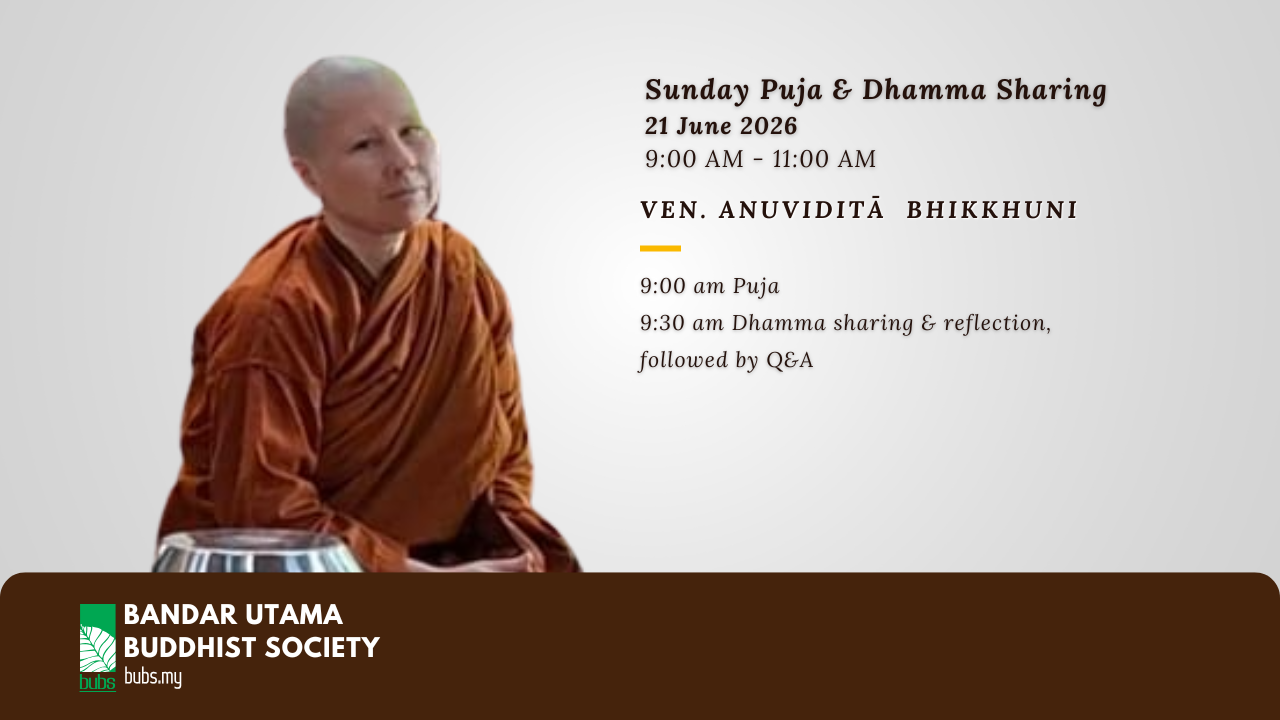
In this Dhamma reflection on 21 June 2026, Venerable Anuvidita Bhikkhuni explores the practical application of Right View (sammā-diṭṭhi) as the foundational "dawn" of the Buddhist path, bridging the gap between ancient theory and modern daily life. By referencing the Velāma Sutta, she illustrates a hierarchy of merit that culminates not in material giving, but in the profound spiritual development found through keeping the five precepts, cultivating loving-kindness (mettā), and perceiving impermanence (anicca). The discourse emphasizes that understanding the five aggregates (khandas) and accepting the "unpainted reality" of one’s current state are essential for managing suffering and reducing the ego's power. Ultimately, the Venerable encourages a practice rooted in honest self-investigation and kindness, suggesting that the most transformative tool available is the constant awareness that all phenomena are fleeting and unreliable.

In this Dhamma talk on 14 June 2026, Luang Por Yao emphasises that spiritual progress begins with a humble and respectful attitude towards the Triple Gem, which allows a practitioner to truly listen and perceive the Dhamma. He recounts the historical significance of the First Turning of the Wheel of Law, where the first disciple attained enlightenment by realising the impermanence and unsatisfactoriness of all conditioned phenomena. The teaching highlights that our internal suffering stems from ignorance and attachment, likening our identification with the self to a person fruitlessly chasing their own shadow. To overcome this, Luang Por encourages a diligent practice of mindfulness and merit-making, urging listeners to relinquish their attachment to the physical body before death inevitably returns its elements to nature. Ultimately, the purpose of the discourse is to foster Right View, transforming a clouded mind into one that is bright, clear, and firmly established in the truth of non-self.
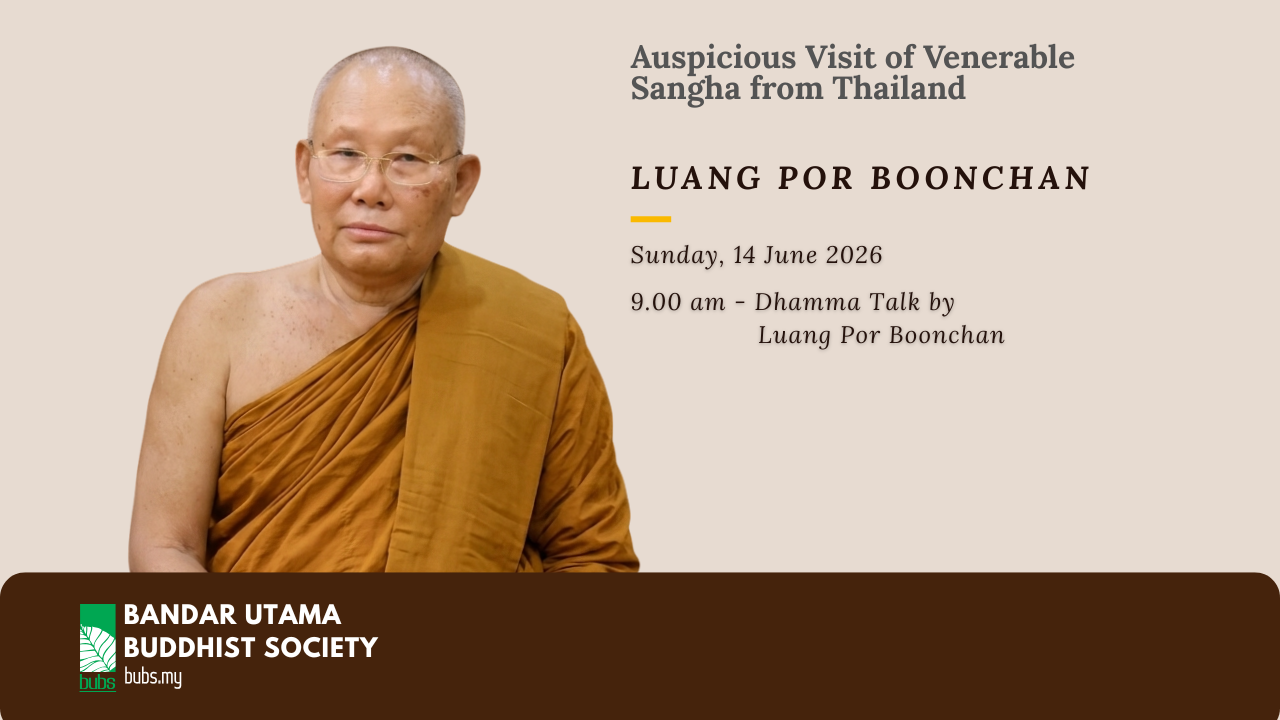
In this morning's Dhamma reflections on 14 June 2026, Luang Por Boonchan emphasizes that genuine spiritual progress requires moving beyond academic study and towards practical inner work. While listening to sermons and memorising scriptures provides a necessary foundation, the speaker explains that true Dhamma only arises when these teachings are actively applied within one’s own heart. He encourages followers to have unwavering confidence in their human potential, noting that enlightenment is accessible to everyone, regardless of gender or lay status, as long as they remain diligent. By focusing on the transformation of the mind rather than external rituals or seeking blessings from others, practitioners can cultivate their own merit and wisdom. Ultimately, the source suggests that the experience of truth will naturally dissolve doubts and lead to a profound, internal realisation of the path.

In this evening Dhamma talk on 13 June 2026, Luang Por Thongpoon explores the profound connection between human existence and the accumulation of merit, illustrating how our current lives are shaped by past actions. He emphasizes that the core of Buddhist practice involves cultivating virtuous kamma through ethical conduct, such as observing the five precepts, which serves as a necessary foundation for mental development. The talk provides a structured overview of the mechanics of kamma, detailing how different types of actions influence our immediate reality, future rebirths, and the critical transition during the moment of death. Ultimately, Luang Por encourages his audience to use their unique opportunity as human beings to refine the mind and abandon defilements like greed and delusion. By viewing the Dhamma as a mirror for the soul, practitioners can navigate the cycle of samsara toward a state of lasting peace and spiritual liberation.
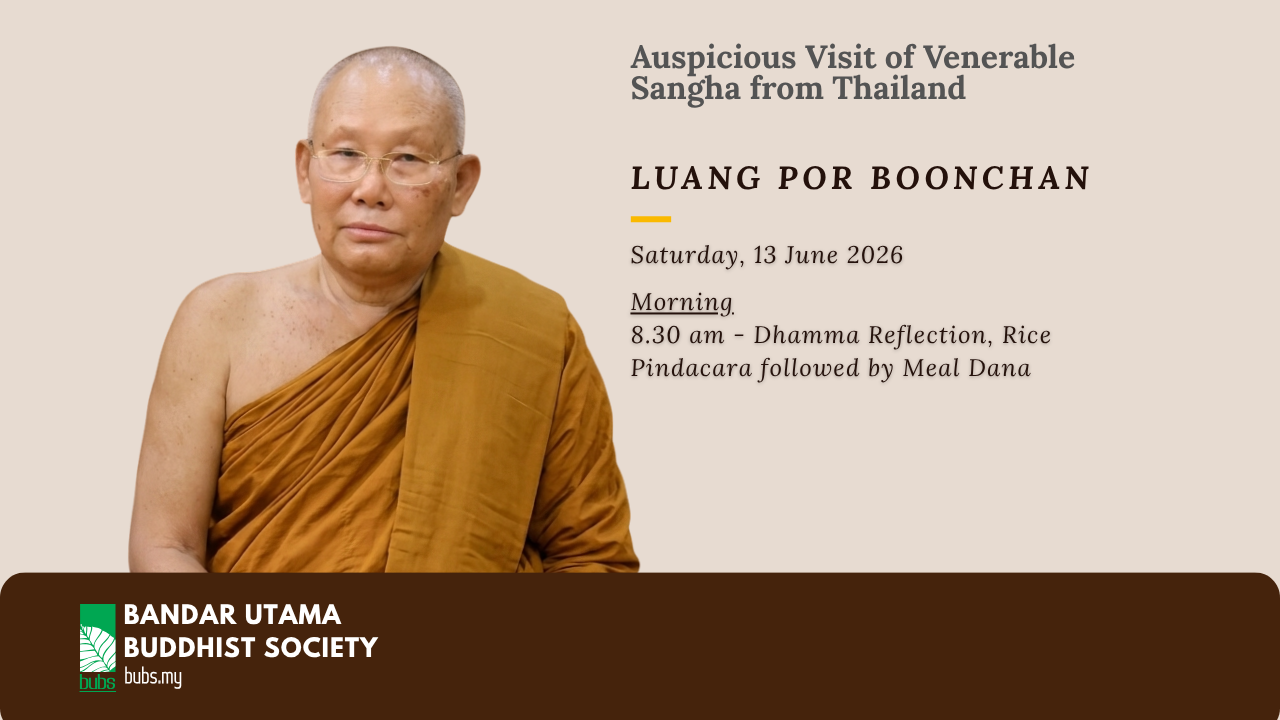
In this inspiring and practical morning Dhamma reflection on 13 June 2026, revered forest monk Luang Por Boonchan offers a beautiful roadmap for lay Buddhist practitioners. Beginning with a profound unpacking of the chant Namo, Luang Por illustrates how our physical bodies are a sacred inheritance from our parents—a powerful tool meant for the cultivation of Dana (generosity), Sila (morality), and Bhavana (meditation). Drawing on the classic forest tradition style, he reminds us that the human realm is the ultimate crossroads of samsara. Since the mind (citta) "has no cemetery" and continues past physical death, we must act with urgency.
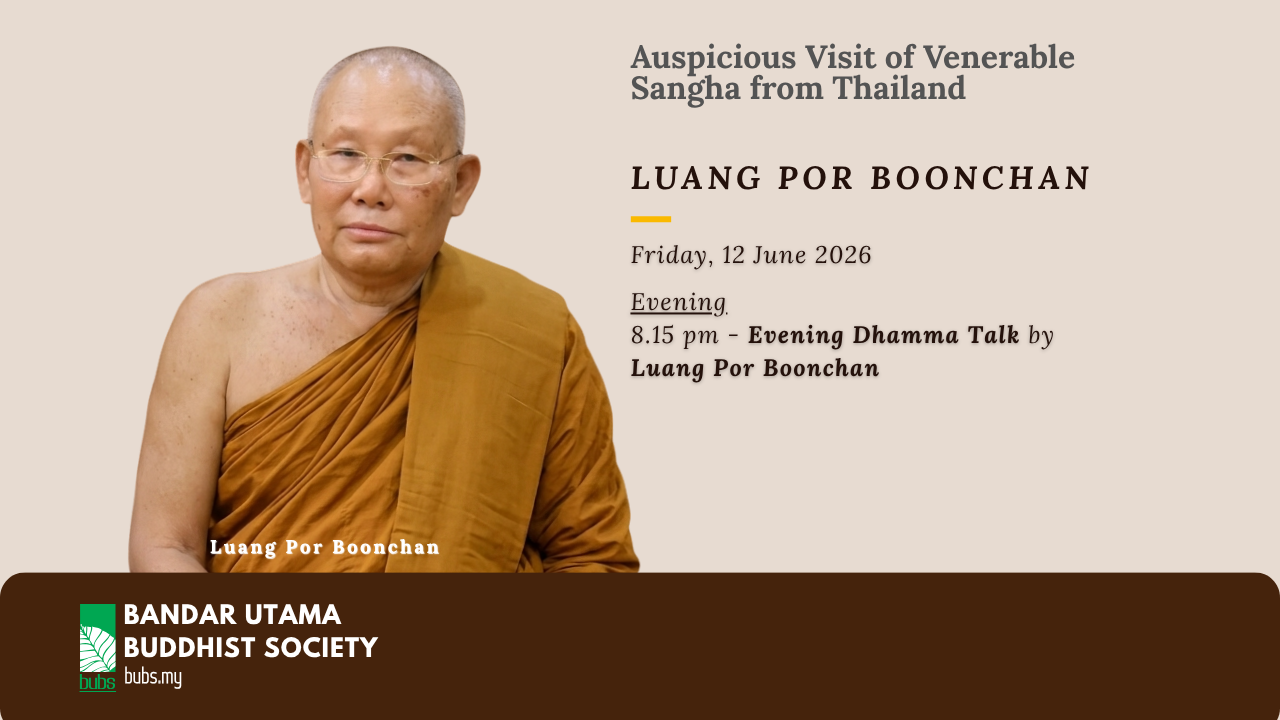
In this Dhamma talk on 12 June 2026, Luang Por Boonchan emphasizes that moral virtue (Sila) serves as the essential foundation for all spiritual progress, comparing it to the solid base of a house. He explains that meditation practice consists of two components: Samatha, which focuses the mind to achieve stillness, and Vipassana, which utilises wisdom to investigate the nature of reality. Drawing from his fifty years of monastic experience, the teacher shares that true spiritual insight is a timeless reality available in every era to those who practice with sincerity and persistence. He encourages followers to maintain a consistent meditation object, such as "Buddho", rather than frequently changing methods. Ultimately, the discourse highlights that direct personal experience of the truth far surpasses theoretical knowledge, leading to a profound sense of peace and the cessation of doubt.
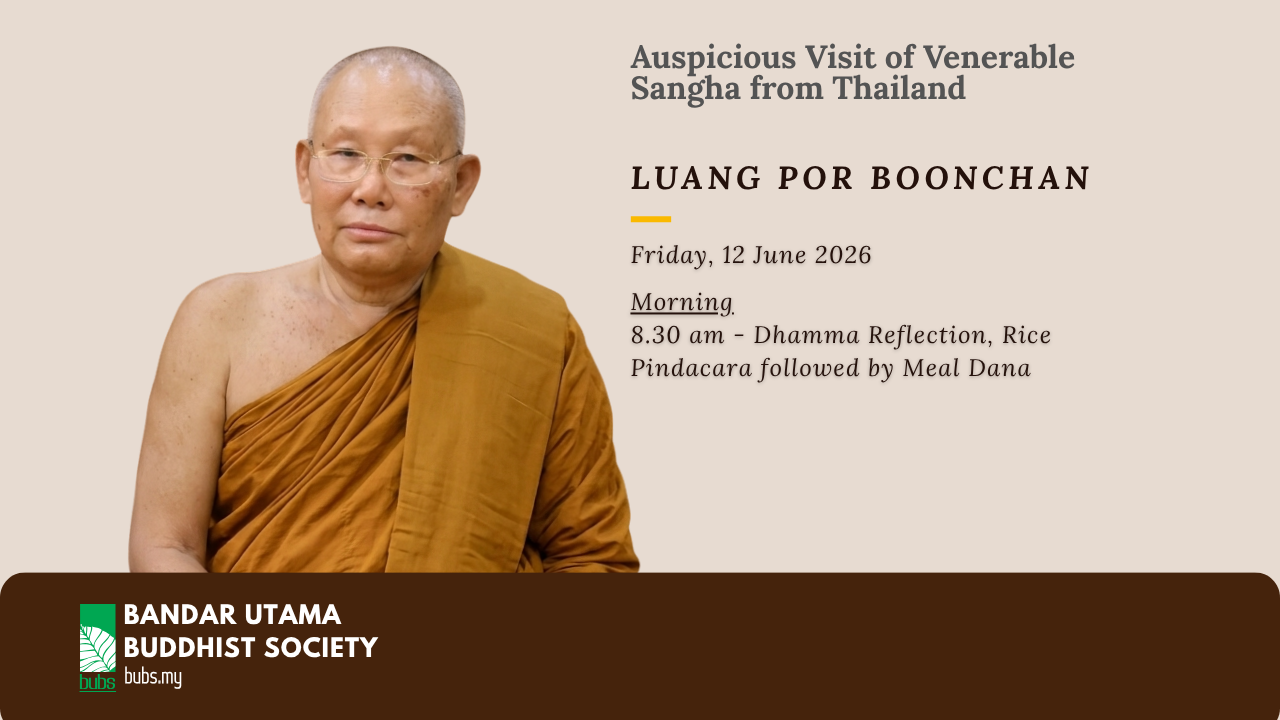
In this Dhamma talk on 12 June 2026, Luang Por Boonchan explains that being born in the human realm provides a unique and high-capital opportunity to cultivate merit that is unavailable to other beings. By practicing generosity, morality, and wisdom, individuals can secure a future free from want, ensure a long life, and ultimately reach the highest liberation of Nirvana. The teacher emphasizes that the mind is the master of our actions, carrying the seeds of our past deeds into the present and guiding our path toward spiritual awakening. Finally, Luang Por highlights the vital duty of sharing merit with ancestors and departed relatives, who lack the physical form necessary to perform these virtuous deeds themselves.


Explore an extensive archive of over 2,500 Dhamma talks from Ven. Thanissaro Bhikkhu of the Metta Forest Monastery. Rooted in the Thai Forest Tradition, these insightful 15-minute sessions have been recorded nightly since 2000 and are updated at the start of every month.

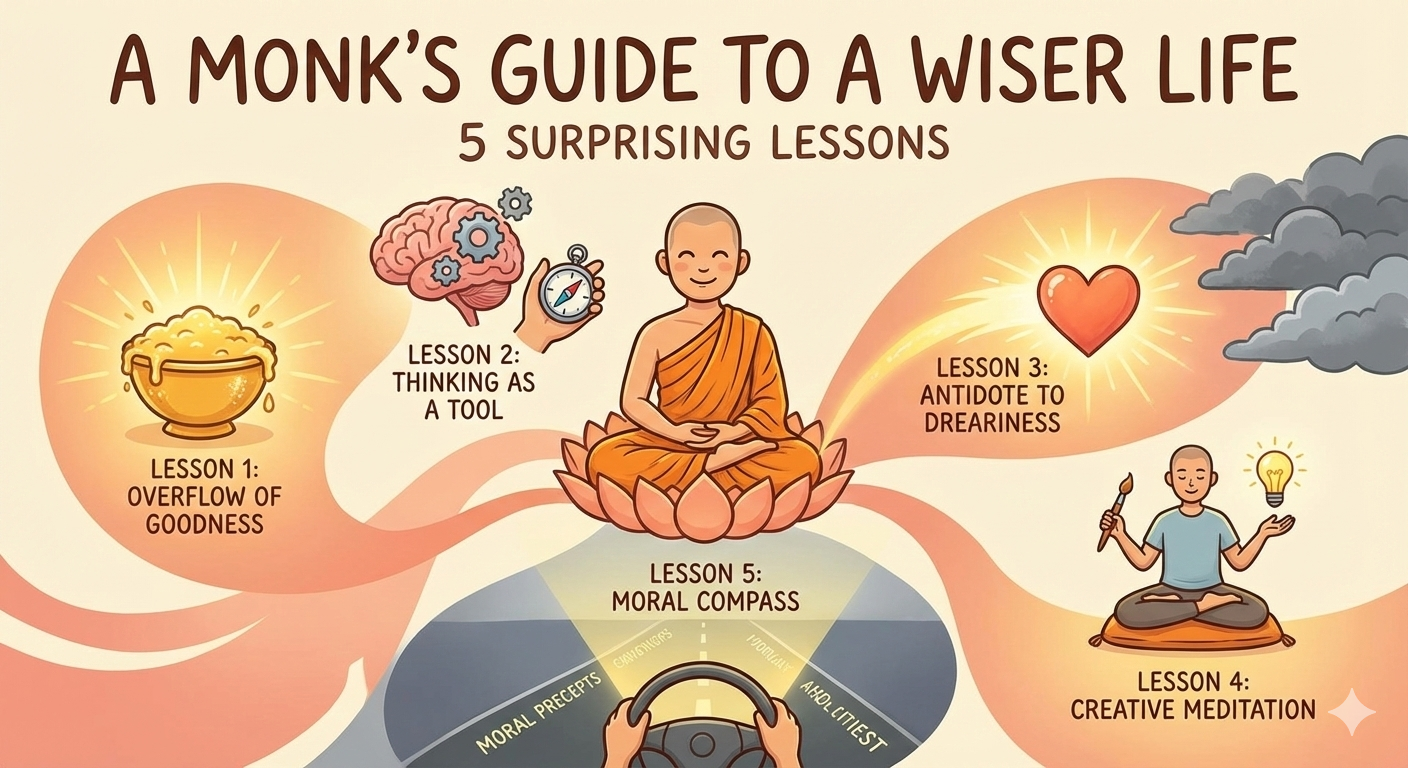
Buddhism is often framed by what we leave behind—suffering, desire, and ego. But what if the path is actually about what we gain? In this guide, we dive into five surprising lessons from Ven. Ajahn Jayasaro that reframe the Buddhist journey as a creative, positive pursuit. Learn why "dreariness" is the true opponent of joy, how to use your tongue to quiet your mind, and why true mindfulness is inseparable from integrity. Discover a wiser way to live that goes far beyond the meditation cushion.
"If there were a foolproof method, every fool would be awakened." Buddhist meditation is often marketed as a passive escape from stress, but the authentic path is a rigorous, pragmatic discipline. Drawing from the "Four Bases for Success," this article examines five counter-intuitive lessons that reframe meditation as a skillful effort. We explore the necessity of cultivating a strong, functional sense of self and the tactical use of "lesser evils" to navigate intense emotions. Whether you are a seasoned practitioner or a curious beginner, these insights offer a strategic roadmap for anyone looking to move beyond simple bliss and toward genuine, lasting wisdom.
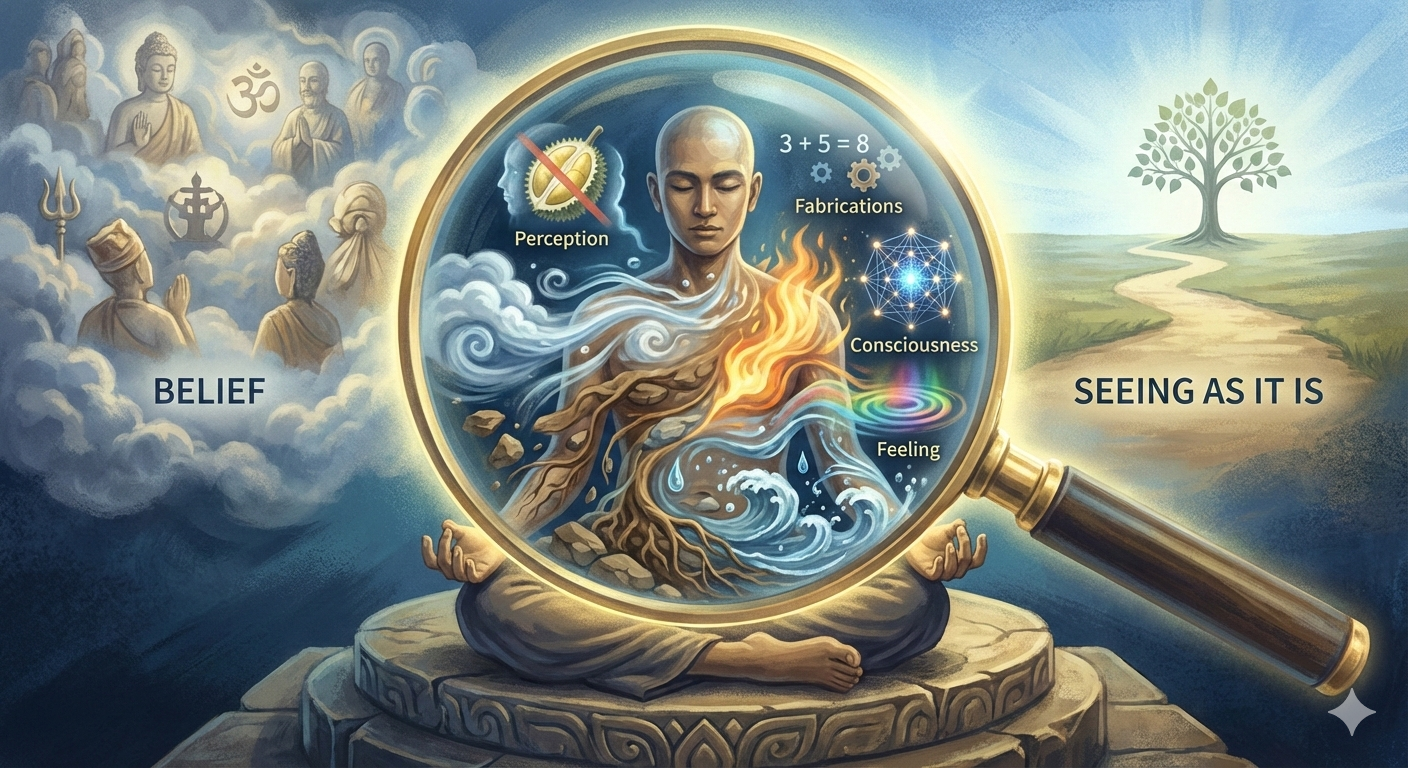
What if Buddhism isn’t a religion of "belief," but a science of the mind? In this deep dive into the teachings of Ven. Ajahn Kittisobhano, we move beyond the universal cliches of "doing good" and "calming the mind" to uncover the Buddha’s radical differentiator: the wisdom of seeing things as they truly are. From deconstructing the body into its core elements to a "scientific" verification of our thoughts, this article reveals why "me and mine" is an imaginary drama—and how waking up from it is the only way to end suffering. Stop being a blind believer and become an astute investigator of your own reality.
We think we know the story: a sheltered prince shocked by the sight of aging, sickness, and death, sneaking away in the night to find enlightenment. But what if this foundational narrative is actually a later invention, borrowed from the tale of a different Buddha entirely? A deep dive into the earliest scriptures, the Pāli Canon, reveals a surprisingly different picture. From the true, heartbreaking nature of his departure to his rejection of "zoning out" in meditation, discover three major misconceptions that completely reframe the Buddha’s journey from a fairy tale into a grounded, human path of direct observation.

Dhamma talks are held following each Puja session every Sunday. Speakers are invited each week to share the Dhamma with members and friends of BUBS. We are blessed to have many Sangha members, locally and overseas offering Dhamma teachings as well as lay Dhamma speakers.
Topic: The Dhamma Legacy - Bodhipakkhiya Dhamma
Speaker: Bro. Benny Liow
Date: 12 Mar 2023


These are the latest Dhamma Talks given mainly in the Amaravati Temple during the Wan Phras (moon/observance days). These talks include those given during the Winter Retreat, Rains / Vassa retreat and the rest of the year. A complete audio library can be found at https://www.amaravati.org
More Videos: https://www.youtube.com/c/AmaravatiBuddhistMonastery