
Introduction
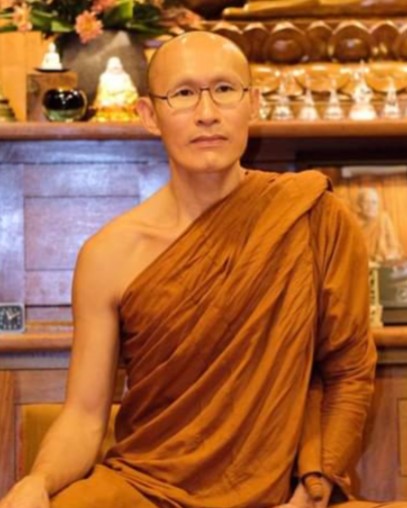
Ajahn Kittisobhāņo, widely known as Bhante Huat Poh, is a Malaysian-born monastic in the Thai Forest Tradition. A former engineer who chose the path of renunciation, he is respected for his ability to translate the profound, ascetic wisdom of the forest tradition into practical guidance for the lay community. Proficient in both English and Hokkien, he serves as a vital bridge for practitioners in Malaysia seeking an authentic connection to the Dhamma.
Early Life and Spiritual Awakening
Born and raised in Penang, Bhante Huat Poh’s spiritual journey began in his teenage years when he was first introduced to Theravada Buddhism. While many young adults move away from spiritual pursuits as they enter the workforce, his interest in the Dhamma only deepened as he matured.
He initially pursued a career in the secular world, working as a professional engineer. However, the drive to understand the nature of suffering and liberation eventually led him to realize that his true calling lay in the monastic life. Following the example of the Buddha, he chose to "go forth" from the home life into homelessness.
Training in the Dhammayut Tradition
Bhante Huat Poh was ordained in the Dhammayut Nikāya, a branch of the Thai Forest Tradition known for its strict adherence to the Vinaya (monastic discipline) and its emphasis on intensive meditation.
He has spent the past 15 years of his monkhood practising in the remote regions of Thailand. This "forest training" involves living in solitude, enduring the elements, and cultivating a mind that is steady and alert. His practice is rooted in the lineage of the great forest masters, focusing on the development of Sati (mindfulness) and Samadhi (concentration) as the foundations for wisdom.
Mission in Thailand and Malaysia
Currently, Bhante Huat Poh divides his time between the rugged mountains of the North and his home state of Penang:
Omkoi, North Thailand: He continues his practice in a remote monastery in Omkoi, a region known for its high-altitude forests and hill-tribe communities. This environment provides the silence and seclusion necessary for deep contemplative work.
Vihara Boon Raksa, Penang: When in Malaysia, he resides at Vihara Boon Raksa, where he is instrumental in sharing the Dhamma with the local community.