Founding Elder

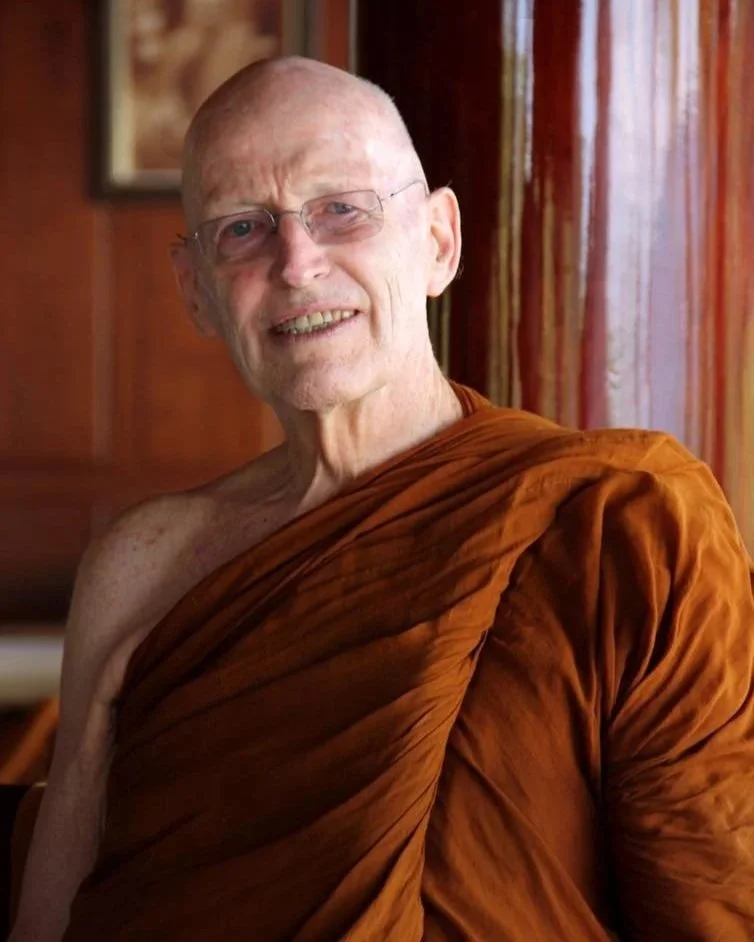
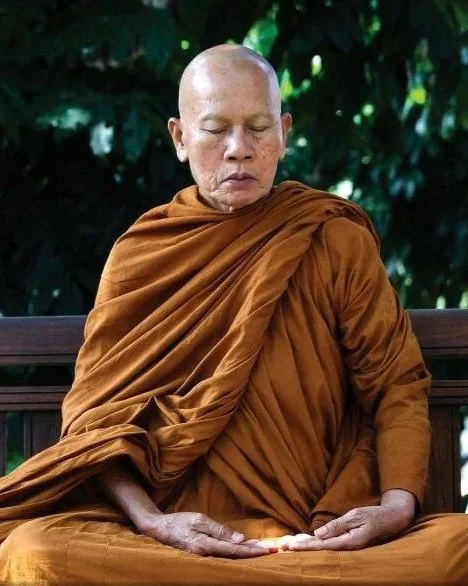
Luang Por Thoon

Introduction

Most Venerable Luang Por Thoon is one of the "Old Guard" disciples of the legendary Ajahn Chah. As one of the very first batch of monks to ordain and train at Wat Nong Pah Pong, he represents the root energy of the Forest Tradition. For over 55 years, he has lived a life of rigorous simplicity and deep meditative inquiry. He is particularly revered for his unwavering commitment to the original standards (Patipada) set by his teacher and for his role in establishing one of the earliest branch monasteries in the lineage.

Early Training: The First Generation

Luang Por Thoon’s monastic journey began at the very heart of the Ajahn Chah movement. He was among the pioneering group of disciples who helped build Wat Nong Pah Pong from a wild, malaria-ridden forest into a world-renowned center of practice.

He spent nine years in close proximity to Ajahn Chah, serving him personally and absorbing the Dhamma through the "osmosis" of daily life. This period was characterized by:

  • Severe Austerity: Practising with minimal requisites to break the mind's attachment to comfort.

  • Direct Instruction: Receiving personal guidance from Ajahn Chah during the formative years of the lineage.

  • Communal Labour: Learning that "work is practice," a hallmark of the Wat Nong Pah Pong style.

Abbot of Wat Pah Tam Seng (The 5th Branch)

Recognizing Luang Por Thoon's spiritual maturity and leadership capacity, Ajahn Chah appointed him to lead Wat Pah Tam Seng. Established 45 years ago, it holds a place of high honour as the 5th branch monastery of Wat Nong Pah Pong.

Under Luang Por Thoon’s guidance, Wat Pah Tam Seng has remained a sanctuary for those seeking the traditional "Forest Way." He has presided over the monastery for four decades, maintaining a stable and peaceful environment for generations of monks and laypeople.
Luang Por Anek Yasadinno

Introduction

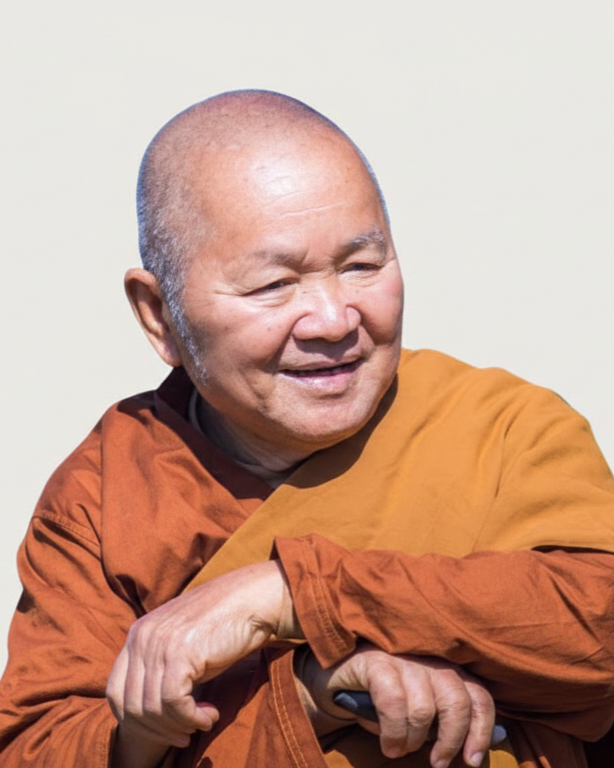
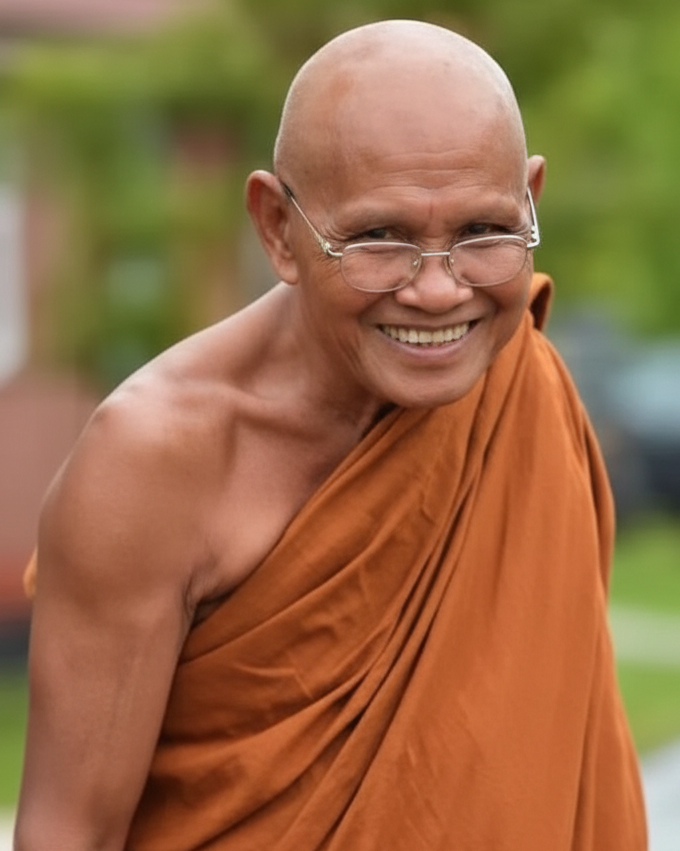
Luang Por Anek Yasadinno is one of the most senior and deeply respected elders within the global community of the Ajahn Chah lineage. Known for his humility, craftsmanship, and profound dedication to the Dhamma, he has served as a pillar of the Thai Forest Tradition for over five decades. He is the founding abbot of Wat Pah Sai Ngam, a monastery renowned for its natural beauty and its role as a sanctuary for both spiritual practice and social compassion.

Early Life and Path to the Forest

Born in 1946 in the Det Udom District of Ubon Ratchathani, Thailand, Luang Por Anek’s spiritual journey began in his youth. In 1967, at the age of 21, he received full ordination as a Bhikkhu at his local village monastery.

Seeking a deeper and more rigorous practice, he moved to Wat Nong Pah Pong in 1968 to train under the direct tutelage of the legendary meditation master Luang Por Chah. During these formative years, he immersed himself in the "Forest Way"—a lifestyle centered on simplicity, endurance, and the constant cultivation of mindfulness in all postures.

Building Wat Pah Sai Ngam: The Temple of Banyan Trees

In 1973, after several years of intensive training, Luang Por Anek was entrusted by Luang Por Chah to establish a new branch monastery. He became the first abbot of Wat Pah Sai Ngam, a role he has held for over 50 years.

Luang Por Anek is uniquely recognized for his artistic and architectural vision. He personally oversaw the design and construction of the monastery, which is famous for:

  • The "Banyan Tree" Design: The monastery is integrated seamlessly with the surrounding forest, featuring unique structures built around giant banyan trees and natural rock formations.

  • Handcrafted Artistry: Many of the monastery’s Buddha images and statues were handcrafted by Luang Por Anek himself, reflecting his belief that work and craftsmanship are forms of meditation.

  • Open-Air Dhamma Hall: The monastery’s Sala (hall) is designed with an open-air concept, allowing the Sangha and laypeople to practice amidst the sounds and elements of nature.

Social Welfare and Compassion

Beyond his role as a meditation teacher, Luang Por Anek is a pioneer in integrating Buddhist principles with social welfare. Since 1991, he has established and led numerous community projects, including:

  • The Buffalo and Cow Welfare Fund: Rescuing animals and supporting sustainable rural livelihoods.

  • Sangha Medical Fund: Assisting with the healthcare needs of monastics in remote areas.

  • Community Compassion Funds: Providing financial and spiritual support to the underprivileged in the Ubon province.

Luang Por Piak

Luang Por Piak is one of Thailand’s most respected teachers of Dhamma and meditation. Born in 1948, Luang Por Piak’s  given name is Prasobchai but he was nicknamed ‘Piak’. As a child and young man Luang Por Piak did not have much interest in religion or meditation. It was when he was studying for his Masters in New York that Luang Por Piak began to develop an interest about the mind. When he returned to Thailand from New York for medical treatment, he spent some time in a monastery under the guidance of Luang Pu Boon Nah (disciple of  Luang Pu Kao Wang). He soon discovered he has a genuine affinity for the practice and decided to ordain as a monk for the annual 3-month rains retreat. One of his aunts advised him to visit three teachers: Luang Pu Kao, Luang Pu Fun and Luang Por Chah (all three being disciples of Luang Pu Mun). When Luang Por Piak met Luang Por Chah, he had a strong intuitive  sense that this was the right teacher for him. On  3rd July 1976, Venerable Piak received full Bhikkhu ordination from Luang Por Chah. Luang Por Piak is now the Abbot of Wat Pah Cittabhavana, Pathumthani, Thailand.

Luang Por Liem

Introduction

Most Venerable Luang Por Liem Ṭhitadhammo is the spiritual head of the worldwide Ajahn Chah lineage. As the chosen successor to Ajahn Chah, he carries the weight of maintaining the standards of the "Forest Tradition" for over 300 branch monasteries globally. He is a living embodiment of the Dhamma, revered for his profound simplicity, unwavering discipline (Vinaya), and a presence that radiates the "silent wisdom" characteristic of the great forest masters.

Early Life and The Call of the Forest

Born on November 5, 1941, in Sri Saket Province, Northeast Thailand, Luang Por Liem entered the monastic life at the age of twenty. While he spent his early years practising in village monasteries, his search for a deeper, more authentic practice led him to join the Forest Tradition in 1969.

It was during this time that he met Luang Pu Chah at Wat Nong Pah Pong. Under Luang Pu’s guidance, he found the rigorous training he was seeking—a lifestyle centered on endurance, mindfulness, and the total integration of Dhamma into every physical action.

The Chosen Successor

Luang Por Liem quickly became one of Ajahn Chah’s closest and most trusted disciples. His dedication to the community and his steady, reliable nature were evident to all. In 1982, when Ajahn Chah became severely ill and lost his ability to speak, the heavy responsibility of leading the community fell upon Luang Por Liem.

Recognizing his wisdom and administrative capacity, the Sangha of Wat Nong Pah Pong formally appointed him as the Abbot. For over 40 years, he has fulfilled this duty, serving as the "Steady Anchor" for the lineage during its period of massive international expansion.

Guardian of the Heritage

Luang Por Liem’s primary mission has been the preservation of the "Heritage of Wat Nong Pah Pong." This involves:

  • The Standard of Sila: Maintaining the strict monastic discipline that Ajahn Chah insisted upon.

  • Communal Harmony: Guiding a diverse, international Sangha of monks, nuns, and lay practitioners with a "cool heart" (Jai Yen).

  • Simplicity: Despite his high rank and global influence, Luang Por remains incredibly accessible, often found engaged in manual labour or sitting quietly in the forest, demonstrating that the highest Dhamma is found in the simplest acts.

Luang Por Sumedho

Introduction

Luang Por Sumedho is the most senior Western representative of the Thai Forest Tradition. A direct disciple of the legendary Ajahn Chah, he was the first Westerner to be trained by the master in the jungles of Northeast Thailand. For over four decades, Luang Por Sumedho has been the primary visionary behind the establishment of the Forest Sangha in the West, overseeing the founding of numerous monasteries across Europe, North America, and Australasia. He is revered worldwide for his profound wisdom, humor, and his "intuitive" approach to the Dhamma.

Early Life and Global Journey

Born Robert Karr Jackman in Seattle in 1934, Luang Por Sumedho’s early life was marked by service and academic pursuit. He served as a U.S. Navy medic during the Korean War before pursuing a BA in Far Eastern Studies and an MA in South Asian Studies at UC Berkeley.

His path to the robe was unexpected; while serving in the Peace Corps in Borneo and traveling through Singapore, the sight of a passing Buddhist monk sparked a deep, intuitive interest in the monastic life. In 1966, he traveled to Nong Khai, Thailand, to begin his life as a novice, taking full Bhikkhu ordination the following year.

Training with Ajahn Chah

In 1967, Luang Por Sumedho became the first Western disciple of Ajahn Chah at Wat Nong Pah Pong. He spent ten years in rigorous training, living a life of extreme simplicity and intensive meditation. His relationship with Ajahn Chah was foundational; the master’s emphasis on "being the practice" rather than just studying it became the hallmark of Luang Por's own teaching style.

In 1975, he helped establish and became the first abbot of Wat Pa Nanachat (The International Forest Monastery) in Thailand, a site dedicated specifically to training the growing number of non-Thai seekers.

Planting the Dhamma in the West

In 1977, Ajahn Chah brought Luang Por Sumedho to England. Recognizing the potential for the Dhamma to flourish in the West, Ajahn Chah instructed him to remain and establish a branch monastery. This led to the founding of:

  • Cittaviveka (Chithurst Buddhist Monastery): The first Thai Forest monastery in the UK, established in 1979.

  • The Siladhara Lineage: In a landmark move for the tradition, Luang Por established a ten-precept ordination lineage for women.

  • Amaravati Buddhist Monastery: Founded in 1984, this became his primary residence and a major international center for Dhamma study and practice.

Global Impact and Retirement

Luang Por Sumedho’s influence extends far beyond the monasteries he founded. He has been a primary catalyst for a global network of monasteries that now spans the United Kingdom, Switzerland, Italy, France, Canada, the USA, Australia, and New Zealand.

After serving as a spiritual beacon for the Western Sangha for decades, Luang Por Sumedho announced his retirement in 2010, handing the abbotship of Amaravati to Ajahn Amaro. After spending several years in Thailand, he returned to Amaravati in 2020, where he currently resides as the community's most senior elder.