Āyasmā Kumāra was ordained in 1999 at the age of 27 by Sayadaw U Revata at Subang Jaya Buddhist Association. Currently, he resides in Sāsanārakkha Buddhist Sanctuary (www.sasanarakkha.org), Taiping, where he learns from Bhaddanta Aggacitta Mahāthera and acts as his personal assistant. He graduated with a bachelor degree in education (Teaching English as a Second Language) from the University of Malaya. It was during his studies there that he became enthusiastic about the Buddha’s teachings and decided that he wanted to live this life as a monk. Since then, with his training in education, he has been sharing the Dhamma in various ways and in several languages (mainly English, Mandarin and Hokkien) with Buddhists of various traditions and non-Buddhists too.
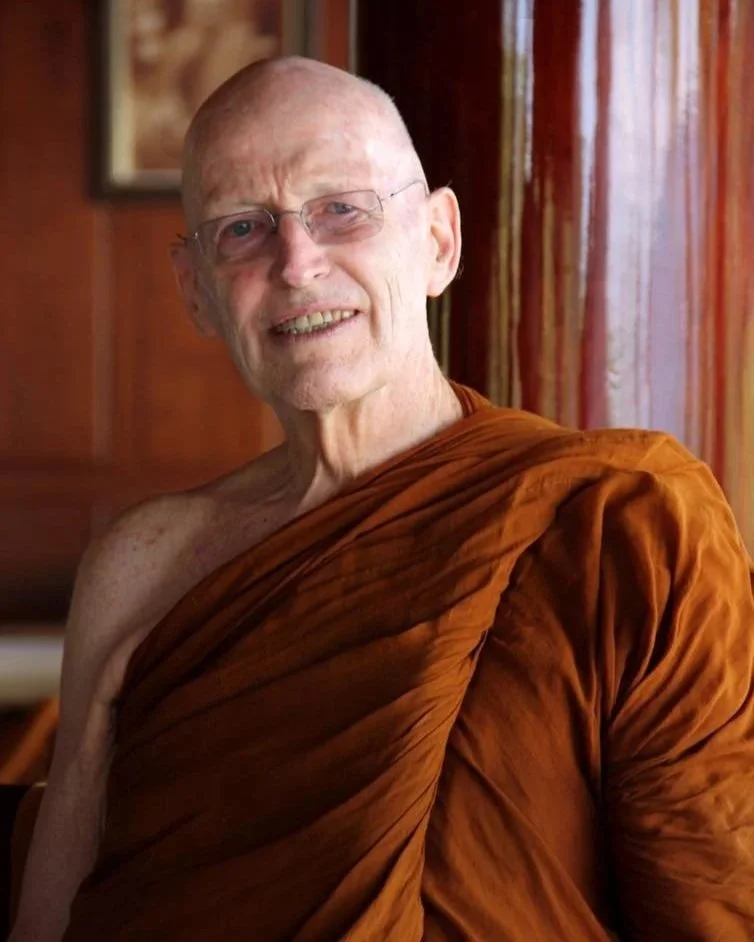
Luang Por Sumedho
Introduction
Luang Por Sumedho is the most senior Western representative of the Thai Forest Tradition. A direct disciple of the legendary Ajahn Chah, he was the first Westerner to be trained by the master in the jungles of Northeast Thailand. For over four decades, Luang Por Sumedho has been the primary visionary behind the establishment of the Forest Sangha in the West, overseeing the founding of numerous monasteries across Europe, North America, and Australasia. He is revered worldwide for his profound wisdom, humor, and his "intuitive" approach to the Dhamma.
Early Life and Global Journey
Born Robert Karr Jackman in Seattle in 1934, Luang Por Sumedho’s early life was marked by service and academic pursuit. He served as a U.S. Navy medic during the Korean War before pursuing a BA in Far Eastern Studies and an MA in South Asian Studies at UC Berkeley.
His path to the robe was unexpected; while serving in the Peace Corps in Borneo and traveling through Singapore, the sight of a passing Buddhist monk sparked a deep, intuitive interest in the monastic life. In 1966, he traveled to Nong Khai, Thailand, to begin his life as a novice, taking full Bhikkhu ordination the following year.
Training with Ajahn Chah
In 1967, Luang Por Sumedho became the first Western disciple of Ajahn Chah at Wat Nong Pah Pong. He spent ten years in rigorous training, living a life of extreme simplicity and intensive meditation. His relationship with Ajahn Chah was foundational; the master’s emphasis on "being the practice" rather than just studying it became the hallmark of Luang Por's own teaching style.
In 1975, he helped establish and became the first abbot of Wat Pa Nanachat (The International Forest Monastery) in Thailand, a site dedicated specifically to training the growing number of non-Thai seekers.
Planting the Dhamma in the West
In 1977, Ajahn Chah brought Luang Por Sumedho to England. Recognizing the potential for the Dhamma to flourish in the West, Ajahn Chah instructed him to remain and establish a branch monastery. This led to the founding of:
Cittaviveka (Chithurst Buddhist Monastery): The first Thai Forest monastery in the UK, established in 1979.
The Siladhara Lineage: In a landmark move for the tradition, Luang Por established a ten-precept ordination lineage for women.
Amaravati Buddhist Monastery: Founded in 1984, this became his primary residence and a major international center for Dhamma study and practice.
Global Impact and Retirement
Luang Por Sumedho’s influence extends far beyond the monasteries he founded. He has been a primary catalyst for a global network of monasteries that now spans the United Kingdom, Switzerland, Italy, France, Canada, the USA, Australia, and New Zealand.
After serving as a spiritual beacon for the Western Sangha for decades, Luang Por Sumedho announced his retirement in 2010, handing the abbotship of Amaravati to Ajahn Amaro. After spending several years in Thailand, he returned to Amaravati in 2020, where he currently resides as the community's most senior elder.

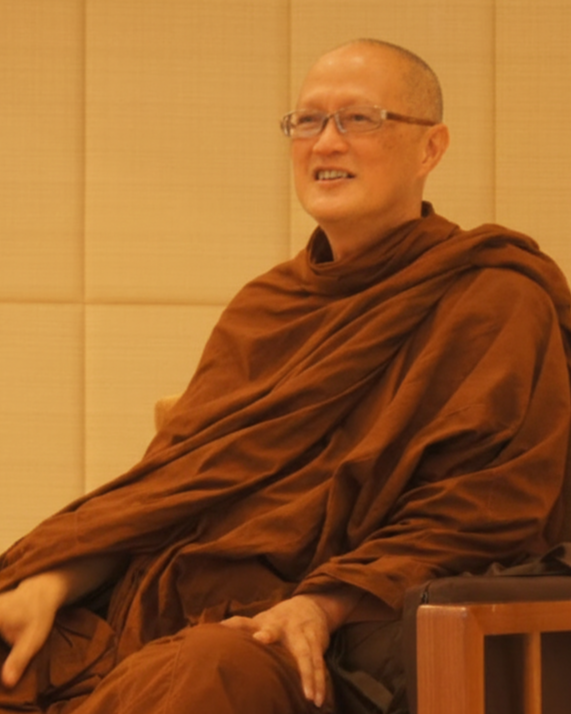
Ven. Sujiva
Introduction
Venerable Sujiva is a globally recognized Malaysian Theravadin monk and a pioneer of Vipassana meditation in the region. With a teaching career spanning over four decades, he has been instrumental in making the rigorous meditation techniques of the Burmese forest tradition accessible to both Asian and Western practitioners. Known for his systematic approach and deep expertise in the Abhidhamma, Ven. Sujiva has guided thousands of meditators toward a deeper understanding of the mind-body process.
Academic Background and Ordination
Born in Malaysia, Ven. Sujiva’s early path was one of academic excellence. He graduated with honors from the University of Malaya in 1975, earning a Bachelor of Agricultural Science. However, his interest soon shifted from the cultivation of the land to the cultivation of the heart.
Shortly after his graduation, he felt the call of the monastic life and took full ordination in the Theravada tradition. He dedicated his early years to intensive study and practice, seeking to bridge the gap between ancient scriptural wisdom and practical experience.
Apprenticeship under the Masters
To refine his meditative insight, Ven. Sujiva traveled extensively, learning from various masters in Malaysia, Thailand, and Myanmar (Burma). His most influential training took place under the guidance of Venerable Sayadaw U Paṇḍitābhivaṃsa, the world-renowned successor to Mahasi Sayadaw at the Mahasi Buddhist Meditation Centre in Yangon.
Under Sayadaw U Paṇḍitā’s rigorous supervision, Ven. Sujiva mastered the meticulous "Mahasi" style of noting and insight, a practice characterized by continuous mindfulness of the present moment.
Establishing a Haven for Practice: Santisukharama
In 1984, Ven. Sujiva founded the Santisukharama Hermitage in Kota Tinggi, Johor. This center became a cornerstone for the Malaysian Buddhist community, serving as a dedicated space for long-term intensive meditation retreats. For over a decade, he conducted countless retreats at the hermitage and throughout Malaysia, fostering a generation of practitioners grounded in Sati (mindfulness).
A Global Teacher
Recognizing a growing thirst for the Dhamma in the West, Ven. Sujiva began teaching internationally in 1995. His clear English instructions and structured teaching style made him highly sought after. Since then, he has conducted retreats in:
Oceania: Australia and New Zealand.
Europe: Germany, Italy, Switzerland, and the United Kingdom.
The Americas: The United States and Brazil.
Asia: Hong Kong and Singapore.
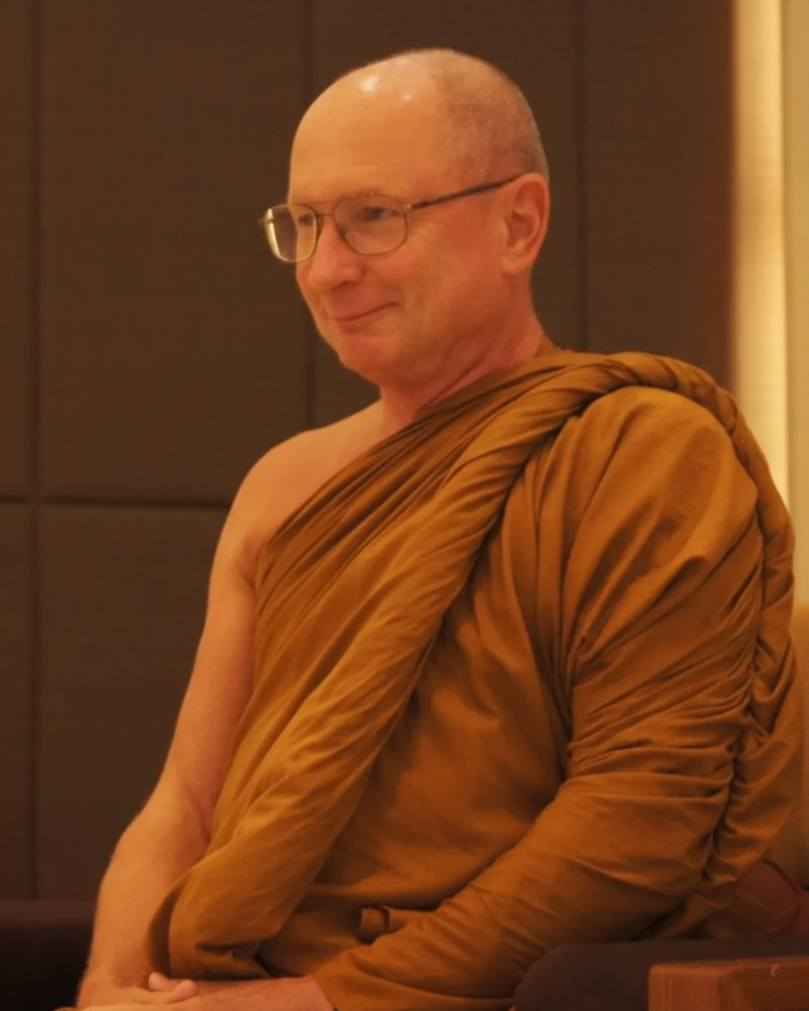
Luang Por Tiradhammo
Introduction
Luang Por Tiradhammo is among the most senior Western monastics in the lineage of Ajahn Chah. With a monastic career spanning over 50 years, he has played a foundational role in establishing the Forest Sangha across three continents: Europe, Australasia, and Asia. Known for his calm, steady presence and deep meditative insight, Luang Por is a "monk of the world," currently traveling globally to share the Dhamma with a focus on practical mindfulness and the wisdom of the forest masters.
Early Seeking and Ordination
Luang Por’s spiritual journey began in his student years during a period of travel through Sri Lanka, where he first encountered the Buddha's teachings. This spark led him to Thailand, where he began meditating at the historic Wat Umong in Chiang Mai.
In 1974, he took full ordination at Wat Meung Man with Venerable Tong. Shortly after, in 1975, he moved to Northeast Thailand to train under the legendary Ajahn Chah at Wat Nong Pah Pong and was among the early residents of Wat Pah Nanachat (the International Forest Monastery).
The Life of a Forest Wanderer
During his formative years in Thailand, Luang Por Tiradhammo embraced the Tudong life. He undertook several arduous journeys on foot through the rugged mountains of Chiang Mai and the plains of the Northeast. These travels allowed him to seek out and learn from many of the most famous forest meditation masters of the era, refining his practice in the crucible of nature and seclusion.
Pioneering the Dhamma in the West
In 1982, Luang Por was invited to the United Kingdom to assist Luang Por Sumedho with the burgeoning Western Sangha. His leadership was quickly recognized, leading to several key appointments:
England (1982–1987): Served at Chithurst Monastery (Cittaviveka) and led Harnham Vihara in Northumberland.
Switzerland (1988–2005): He was instrumental in establishing Dhammapala Monastery near Bern and later oversaw its move to the Alpine village of Kandersteg, serving as the senior monk for nearly two decades.
New Zealand (2005–2012): He assumed the abbotship of Bodhinyanarama in Wellington, providing stability and guidance to the community in the Southern Hemisphere.
A Traveling Teacher
Since 2012, Luang Por Tiradhammo has lived as a "monk of no fixed abode," embodying the ancient tradition of the wandering teacher. He travels extensively throughout Asia, Europe, and North America, conducting meditation retreats and giving Dhamma talks.
His teachings are deeply influenced by his years of solitary practice and his interactions with the great masters of the 20th century. He is a frequent and beloved visitor to Malaysia and Singapore, where he is known for his ability to relate the profound truths of the Forest Tradition to the challenges of modern urban life.