
Introduction
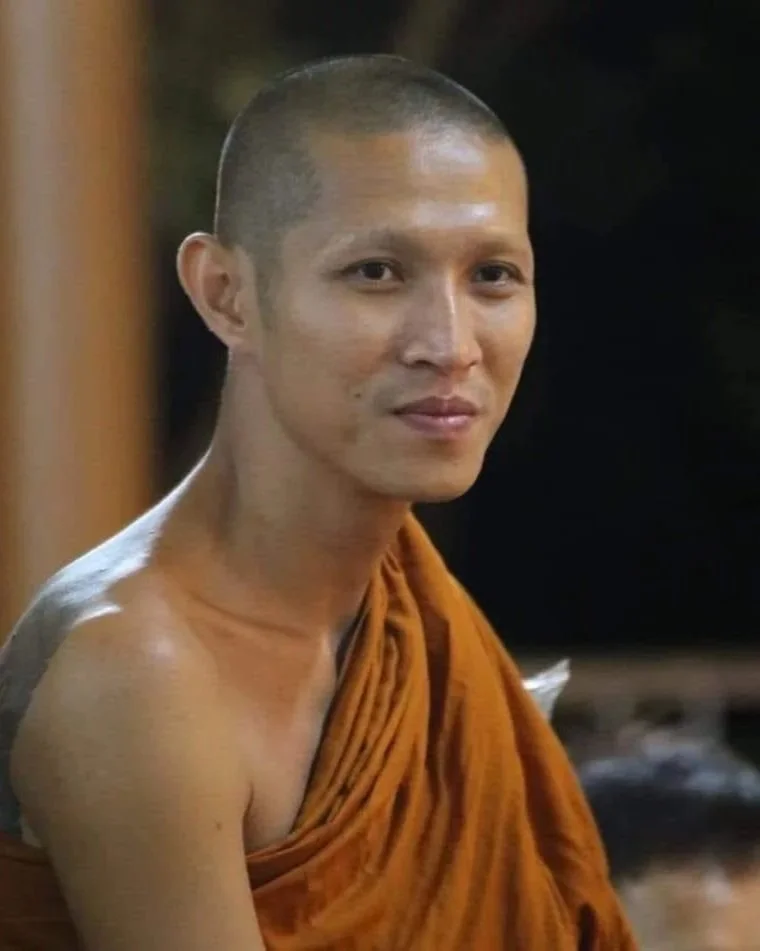
Phra Surawat Khemachitto, affectionately known as Ajahn Golf, is a dedicated meditation master from the Dhammayut school of the Thai Forest Tradition. Based in the forest heartland of Northeast Thailand, he is known for his disciplined adherence to the monastic code and his practical, direct approach to meditation. Having spent decades training under various masters in the lineage of Ajahn Mun, Ajahn Golf brings a wealth of experiential wisdom to his students, emphasizing the importance of internalizing the Dhamma before attempting to teach others.
Roots in the Dhammayut Tradition
Born in Bangkok, Ajahn Golf felt a spiritual calling early in life. At the age of 20, he received full ordination in Udon Thani, a province famous for being the spiritual epicenter of the Thai Forest Tradition. He entered the Dhammayut Nikaya, the monastic order founded by King Mongkut that focuses on a return to the original Dhamma-Vinaya (discipline and teachings) and is the home of the Great Forest Masters.
Years of Diligent Practice
Ajahn Golf spent his formative years as a wandering monk, moving between the provinces of Udon, Sakon Nakhon, Khon Kaen, and Nong Bua Lamphu. This "Forest Heartland" is known for its rugged terrain and remote monasteries. During this period, he practiced under various meditation masters, focusing on:
Cittabhavana (Mental Development): Developing deep concentration and sharp mindfulness through the traditional forest methods.
Seclusion: Spending long periods in solitary practice to observe the subtle movements of the mind.
Dhamma-Vinaya: Maintaining the strict standards of conduct that are the hallmark of the Dhammayut tradition.
Leadership at Wat Pa Anuttaro
Today, Ajahn Golf serves as the Abbot of Wat Pa Anuttaro in Nong Bua Lamphu province. Under his guidance, the monastery has become a sanctuary for those seeking a quiet, intensive environment for meditation.
Notably, Ajahn Golf is recognized for his humility and caution regarding teaching. For many years, he focused solely on his own practice, only beginning to teach Dhamma publicly once he felt he had attained a sufficient depth of understanding and the confidence to guide others correctly. This ensures that his instructions are not merely theoretical but are born from direct personal experience.