
Venerable Sayadaw was born on October 5 in 1952 in Upper Burma. As a young man he came to the local monastery to become a novice. Later he went to the famous Mahagandhayon monastery in Amarapura where his older brother was. In 1972 he was ordained by Ven. Mahagandhayon Sayadaw. He studied the Buddhist scriptures and finally took and passed the Dhammacariya-Exam. After that he taught the Buddhist scriptures for ten years.In 1976 he practiced Vipassana meditation in the Mahasi Meditation Centre in Mandalay where he was taught by Ven. Chanmyay Sayadaw. Some years later he went to the Chanmyay Yeiktha Meditation Centre in Yangon, where he was commissioned to teach meditation. In 1996 Ven. Chanmyay Sayadaw sent him as a teacher and abbot to the new Chanmyay Yeiktha Meditation centre in Hmawbi.Since 2004 he lives in his meditation centre in the suburbs of Yangon and teaches people from Burma and from abroad alike.
Luang Por Anan Akiñcano
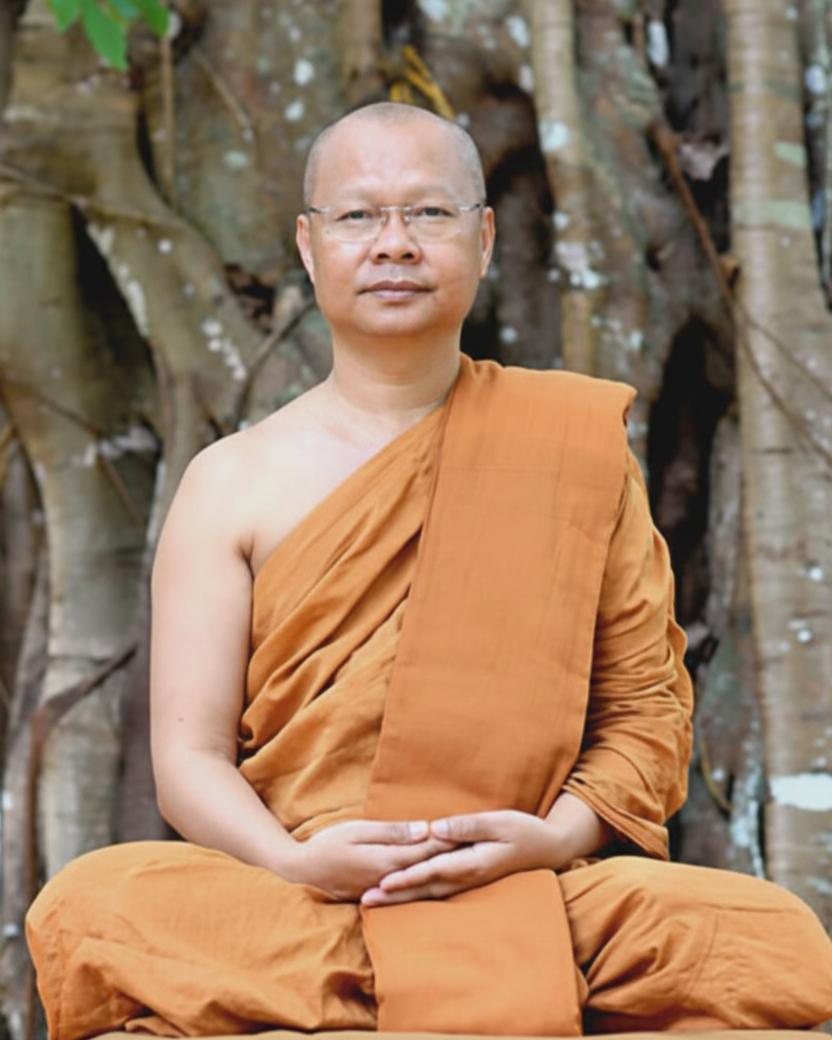
Introduction
Luang Por Anan Akiñcano is widely regarded as one of the most accomplished meditation masters in the contemporary Thai Forest Tradition. A close personal disciple of the legendary Ajahn Chah, Luang Por Anan is revered for his profound mastery of Samadhi (concentration) and his ability to explain deep meditative states with clarity and simplicity. As the founding Abbot of Wat Marp Jan, he provides spiritual guidance to hundreds of monastics and thousands of lay practitioners globally.
Early Training and Service to Ajahn Chah
Luang Por Anan entered the monastic life in 1975, ordaining at Wat Nong Pah Pong under the tutelage of Ajahn Chah. Recognizing his potential and sincere dedication, he was chosen to serve as Ajahn Chah’s personal attendant.
For four years, Luang Por Anan lived in close proximity to his teacher, learning not only through formal meditation but through the observation of Ajahn Chah’s daily conduct. This period of "training through service" allowed him to develop a deep, intuitive understanding of the Dhamma and a resilient heart.
The Path of a Forest Ascetic
Following his years of service, Luang Por Anan sought the solitude of the wilderness to deepen his insight. He spent years as a wandering monk (Tudong), seeking out remote and often hazardous locations to test his mental strength.
In 1984, his journey led him to a dense, uninhabited forest in Rayong Province. Here, he established what would become Wat Marp Jan (The Monastery of the Moon Mountain). The early years were defined by extreme hardship; Luang Por lived in a simple bamboo hut and survived multiple life-threatening bouts of malaria. These near-death experiences served only to sharpen his focus on the impermanence of life and the urgency of practice.
A Master of Stillness and Wisdom
As Luang Por Anan’s reputation for profound inner peace grew, so did the community around him. He is specifically noted for his mastery of the Jhanas (deep meditative absorptions) and his emphasis on using a stable, still mind to investigate the nature of reality.
Today, he oversees an extensive network of practitioners:
Wat Marp Jan: A premier training center for both Thai and Western monastics.
Branch Monasteries: He is responsible for over ten branch monasteries and the spiritual welfare of more than 100 monks.
International Reach: He is a frequent guest teacher in Malaysia, Singapore, and Australia, where his teachings on "developing the heart" resonate with urban practitioners.
Āyasmā Kumāra

Āyasmā Kumāra was ordained in 1999 at the age of 27 by Sayadaw U Revata at Subang Jaya Buddhist Association. Currently, he resides in Sāsanārakkha Buddhist Sanctuary (www.sasanarakkha.org), Taiping, where he learns from Bhaddanta Aggacitta Mahāthera and acts as his personal assistant. He graduated with a bachelor degree in education (Teaching English as a Second Language) from the University of Malaya. It was during his studies there that he became enthusiastic about the Buddha’s teachings and decided that he wanted to live this life as a monk. Since then, with his training in education, he has been sharing the Dhamma in various ways and in several languages (mainly English, Mandarin and Hokkien) with Buddhists of various traditions and non-Buddhists too.
Ven. Ajahn Mettiko
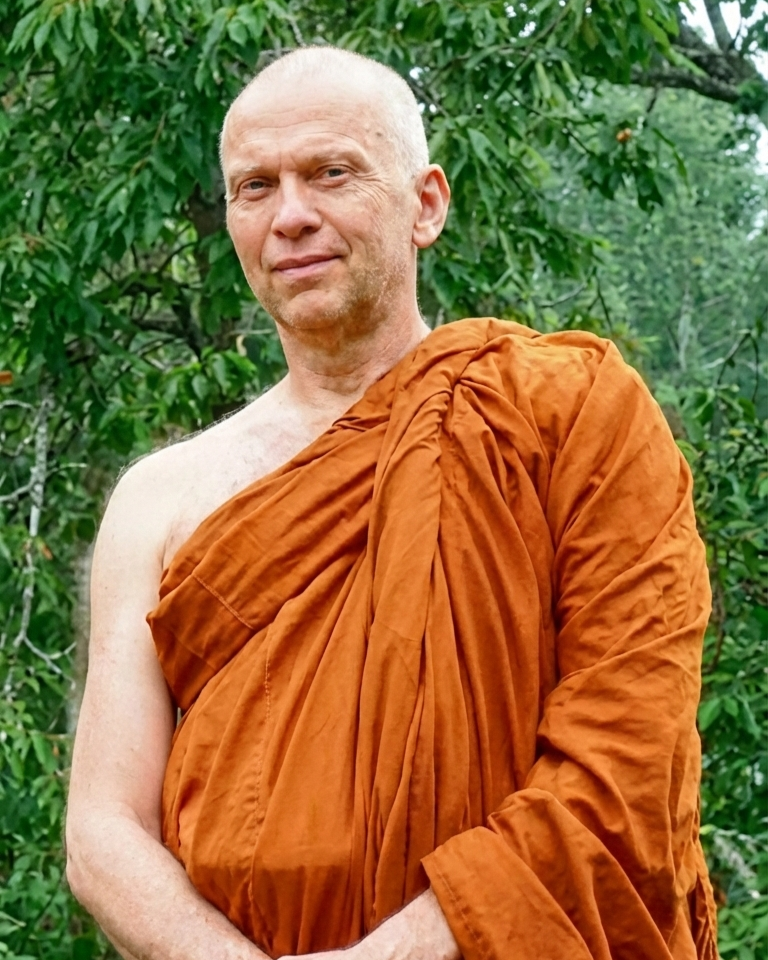
Introduction
Ajahn Mettiko is a German-born monk who embodies the international spirit of the Thai Forest Tradition. Having spent many years training under highly realized masters in Thailand, he eventually returned to his home country to help establish its first traditional forest monastery. Known for his gentle demeanour and his dedication to the Tudong (wandering) lifestyle, Ajahn Mettiko brings a wealth of experience in practising the Dhamma across diverse cultures and landscapes.
Training in the "Cradle of the Forest"
Ajahn Mettiko’s monastic life began in the mountains of Northern Thailand. He received full Bhikkhu ordination in 2004 at Wat Pa Nam Rin in Chiang Mai. For the first four formative years of his monkhood, he practised under the close guidance of Luang Por Thong Daeng Varapañño at Wat Phra Jao Tun Luang—a teacher renowned for his strict adherence to the standards of the forest masters.
His training was characterized by:
Seclusion and Simplicity: Living in the remote mountain forests of the North.
Lineage Integration: Spending time at Wat Pah Nanachat (the International Forest Monastery) to deepen his connection with the global community of Ajahn Chah's disciples.
Tudong Wanderings: Embarking on solitary walking pilgrimages throughout Thailand to test his endurance and sharpen his mindfulness.
A Global Dhammafarer
Ajahn Mettiko is a true "citizen of the Dhamma," having practised in various environmental and cultural contexts. His spiritual journey has taken him far beyond the borders of Thailand. He was among the pioneers who brought the traditional Tudong practice to the forests of Germany, demonstrating the timeless relevance of the Buddha’s path in a Western landscape.
Establishing the Dhamma in Germany
Today, Ajahn Mettiko resides at Muttodaya Forest Monastery in Stammbach, Germany. As the first monastery of its kind in the country, Muttodaya (meaning "Liberated Heart") serves as a sanctuary for those wishing to practice according to the original Dhamma-Vinaya. Alongside Ajahn Cattamalo, Ajahn Mettiko helps provide a training ground for a new generation of European monastics while offering a place of refuge and meditation for the lay community.
Ven. Ajahn Cagino
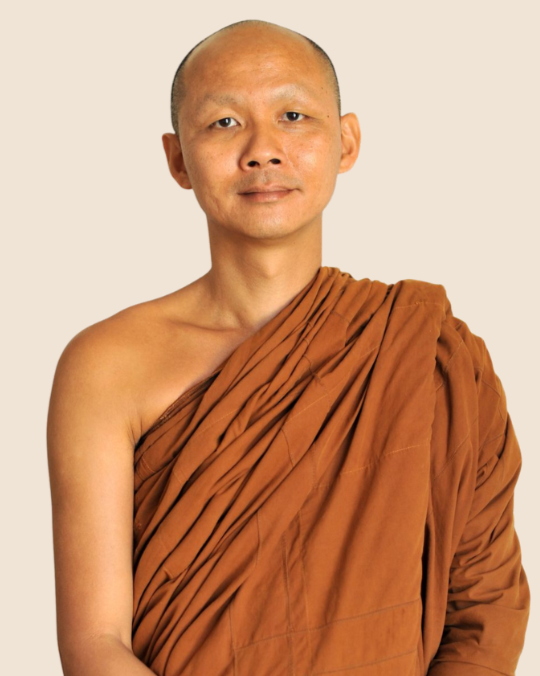
Introduction
Ajahn Cagino is a Malaysian-born monk whose spiritual journey is as remarkable as it is inspiring. Formerly an internationally acclaimed professional photographer, he traded his camera for the monastic robes to seek a deeper truth. Today, he is widely respected for his arduous 4,000km "Tudong" walking journeys and his compassionate work with hilltribe orphans in Northern Thailand through the Dhammagiri Foundation.
From Award-Winning Photographer to Monk
Before his ordination, Ajahn Cagino (born 1967 in Seremban) was a rising star in the world of photography. Between the ages of 22 and 27, he won over 40 prestigious awards, including first place in the Asia Photography Competition. However, professional success did not quell his inner search for meaning.
His quest for Dhamma led him through the forests of Thailand and New Zealand. He initially ordained as a Samanera (novice) at Ang Hock Si Temple in Penang for a year and a half before receiving full Bhikkhu ordination in 1996 at the age of 29. He spent his first five years under the guidance of Luang Por Gungha in Thailand.
Re-ordination and the 4,000km Journey
In 2001, seeking to deepen his practice in the lineage of Ajahn Chah, Ajahn Cagino re-ordained at Wat Pah Nanachat (the International Forest Monastery). It was during this period that he undertook a legendary Tudong—a solitary walking pilgrimage—covering no less than 4,000km on foot through the rugged wilderness of North and Northeast Thailand.
During these years of wandering, he picked up his camera once more, not for personal fame, but to document the daily lives and quiet dignity of forest monks. These images were later compiled into the renowned photographic essay, "Dhammafarers," which has touched the hearts of many worldwide.
The Birth of Dhammagiri Foundation
While practicing in the remote caves of Mae Hong Son province, Ajahn Cagino’s path took a turn toward social compassion. He encountered children from minority hilltribes who were orphaned or living in extreme poverty. Seeing their vulnerability to drug trafficking and exploitation, he felt a profound calling to help.
In 2010, he established the Dhammagiri Foundation, a Buddhist children's home that provides:
Education & Guidance: Scholarships and a safe environment for disadvantaged children.
Dhamma Foundation: Teaching moral values, compassion, and self-sufficiency.
Cultural Preservation: Helping children maintain their heritage while adapting to modern society.
Current Leadership
In 2014, Ajahn Cagino established Wat Hongson Wanaram, which was officially recognized as the 302nd branch monastery of Wat Nong Pah Pong. He continues to balance his intensive personal meditation practice with the management of the Dhammagiri Foundation, serving as a bridge between the solitary life of the forest and the compassionate service of society.
"The most beautiful photograph is not captured by a lens, but by a heart that is still and kind." — Ajahn Cagino
Luang Por Sumedho
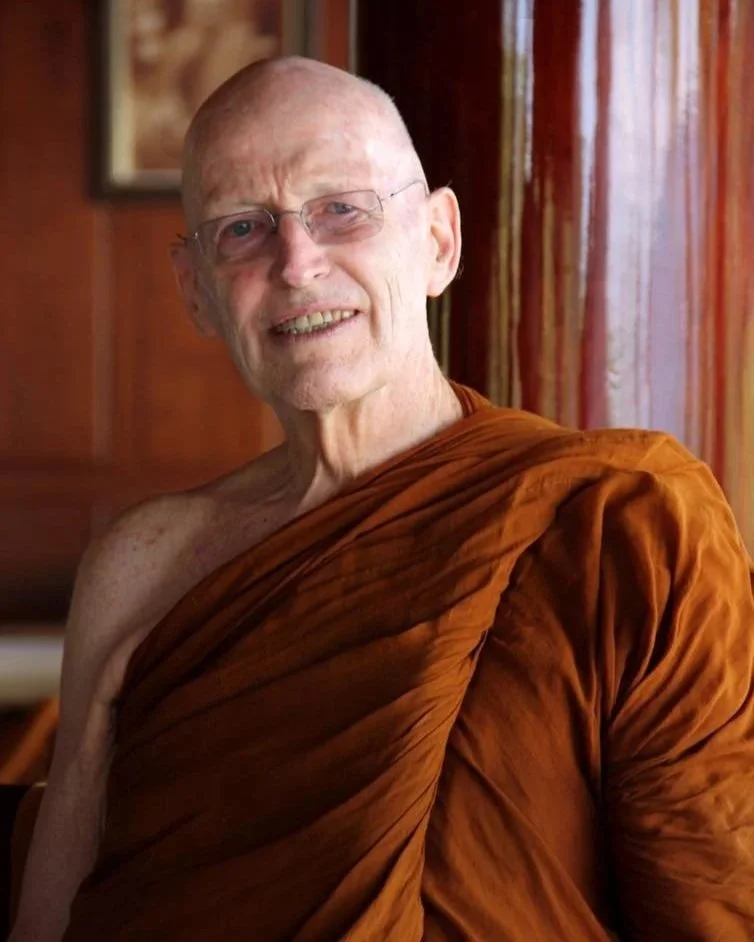
Introduction
Luang Por Sumedho is the most senior Western representative of the Thai Forest Tradition. A direct disciple of the legendary Ajahn Chah, he was the first Westerner to be trained by the master in the jungles of Northeast Thailand. For over four decades, Luang Por Sumedho has been the primary visionary behind the establishment of the Forest Sangha in the West, overseeing the founding of numerous monasteries across Europe, North America, and Australasia. He is revered worldwide for his profound wisdom, humor, and his "intuitive" approach to the Dhamma.
Early Life and Global Journey
Born Robert Karr Jackman in Seattle in 1934, Luang Por Sumedho’s early life was marked by service and academic pursuit. He served as a U.S. Navy medic during the Korean War before pursuing a BA in Far Eastern Studies and an MA in South Asian Studies at UC Berkeley.
His path to the robe was unexpected; while serving in the Peace Corps in Borneo and traveling through Singapore, the sight of a passing Buddhist monk sparked a deep, intuitive interest in the monastic life. In 1966, he traveled to Nong Khai, Thailand, to begin his life as a novice, taking full Bhikkhu ordination the following year.
Training with Ajahn Chah
In 1967, Luang Por Sumedho became the first Western disciple of Ajahn Chah at Wat Nong Pah Pong. He spent ten years in rigorous training, living a life of extreme simplicity and intensive meditation. His relationship with Ajahn Chah was foundational; the master’s emphasis on "being the practice" rather than just studying it became the hallmark of Luang Por's own teaching style.
In 1975, he helped establish and became the first abbot of Wat Pa Nanachat (The International Forest Monastery) in Thailand, a site dedicated specifically to training the growing number of non-Thai seekers.
Planting the Dhamma in the West
In 1977, Ajahn Chah brought Luang Por Sumedho to England. Recognizing the potential for the Dhamma to flourish in the West, Ajahn Chah instructed him to remain and establish a branch monastery. This led to the founding of:
Cittaviveka (Chithurst Buddhist Monastery): The first Thai Forest monastery in the UK, established in 1979.
The Siladhara Lineage: In a landmark move for the tradition, Luang Por established a ten-precept ordination lineage for women.
Amaravati Buddhist Monastery: Founded in 1984, this became his primary residence and a major international center for Dhamma study and practice.
Global Impact and Retirement
Luang Por Sumedho’s influence extends far beyond the monasteries he founded. He has been a primary catalyst for a global network of monasteries that now spans the United Kingdom, Switzerland, Italy, France, Canada, the USA, Australia, and New Zealand.
After serving as a spiritual beacon for the Western Sangha for decades, Luang Por Sumedho announced his retirement in 2010, handing the abbotship of Amaravati to Ajahn Amaro. After spending several years in Thailand, he returned to Amaravati in 2020, where he currently resides as the community's most senior elder.
Ven. Sujiva
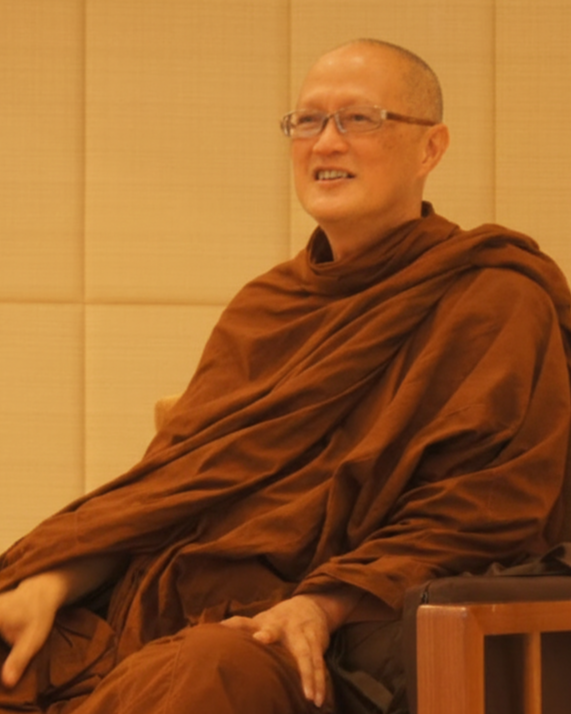
Introduction
Venerable Sujiva is a globally recognized Malaysian Theravadin monk and a pioneer of Vipassana meditation in the region. With a teaching career spanning over four decades, he has been instrumental in making the rigorous meditation techniques of the Burmese forest tradition accessible to both Asian and Western practitioners. Known for his systematic approach and deep expertise in the Abhidhamma, Ven. Sujiva has guided thousands of meditators toward a deeper understanding of the mind-body process.
Academic Background and Ordination
Born in Malaysia, Ven. Sujiva’s early path was one of academic excellence. He graduated with honors from the University of Malaya in 1975, earning a Bachelor of Agricultural Science. However, his interest soon shifted from the cultivation of the land to the cultivation of the heart.
Shortly after his graduation, he felt the call of the monastic life and took full ordination in the Theravada tradition. He dedicated his early years to intensive study and practice, seeking to bridge the gap between ancient scriptural wisdom and practical experience.
Apprenticeship under the Masters
To refine his meditative insight, Ven. Sujiva traveled extensively, learning from various masters in Malaysia, Thailand, and Myanmar (Burma). His most influential training took place under the guidance of Venerable Sayadaw U Paṇḍitābhivaṃsa, the world-renowned successor to Mahasi Sayadaw at the Mahasi Buddhist Meditation Centre in Yangon.
Under Sayadaw U Paṇḍitā’s rigorous supervision, Ven. Sujiva mastered the meticulous "Mahasi" style of noting and insight, a practice characterized by continuous mindfulness of the present moment.
Establishing a Haven for Practice: Santisukharama
In 1984, Ven. Sujiva founded the Santisukharama Hermitage in Kota Tinggi, Johor. This center became a cornerstone for the Malaysian Buddhist community, serving as a dedicated space for long-term intensive meditation retreats. For over a decade, he conducted countless retreats at the hermitage and throughout Malaysia, fostering a generation of practitioners grounded in Sati (mindfulness).
A Global Teacher
Recognizing a growing thirst for the Dhamma in the West, Ven. Sujiva began teaching internationally in 1995. His clear English instructions and structured teaching style made him highly sought after. Since then, he has conducted retreats in:
Oceania: Australia and New Zealand.
Europe: Germany, Italy, Switzerland, and the United Kingdom.
The Americas: The United States and Brazil.
Asia: Hong Kong and Singapore.
Luang Por Tiradhammo
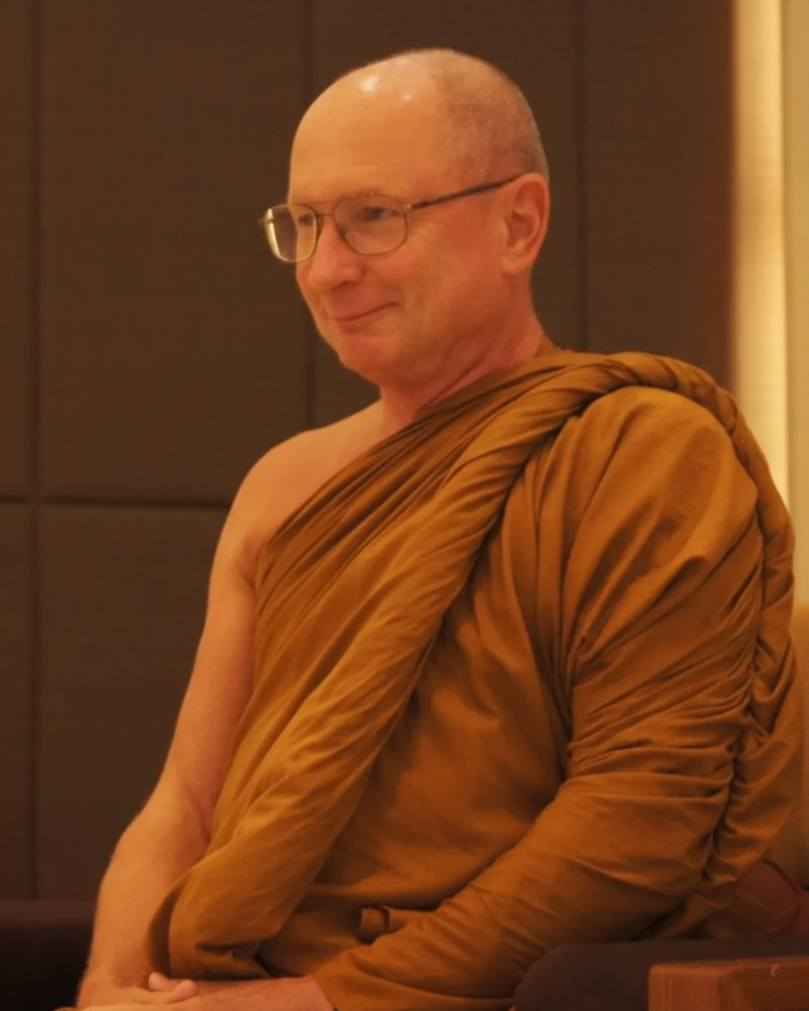
Introduction
Luang Por Tiradhammo is among the most senior Western monastics in the lineage of Ajahn Chah. With a monastic career spanning over 50 years, he has played a foundational role in establishing the Forest Sangha across three continents: Europe, Australasia, and Asia. Known for his calm, steady presence and deep meditative insight, Luang Por is a "monk of the world," currently traveling globally to share the Dhamma with a focus on practical mindfulness and the wisdom of the forest masters.
Early Seeking and Ordination
Luang Por’s spiritual journey began in his student years during a period of travel through Sri Lanka, where he first encountered the Buddha's teachings. This spark led him to Thailand, where he began meditating at the historic Wat Umong in Chiang Mai.
In 1974, he took full ordination at Wat Meung Man with Venerable Tong. Shortly after, in 1975, he moved to Northeast Thailand to train under the legendary Ajahn Chah at Wat Nong Pah Pong and was among the early residents of Wat Pah Nanachat (the International Forest Monastery).
The Life of a Forest Wanderer
During his formative years in Thailand, Luang Por Tiradhammo embraced the Tudong life. He undertook several arduous journeys on foot through the rugged mountains of Chiang Mai and the plains of the Northeast. These travels allowed him to seek out and learn from many of the most famous forest meditation masters of the era, refining his practice in the crucible of nature and seclusion.
Pioneering the Dhamma in the West
In 1982, Luang Por was invited to the United Kingdom to assist Luang Por Sumedho with the burgeoning Western Sangha. His leadership was quickly recognized, leading to several key appointments:
England (1982–1987): Served at Chithurst Monastery (Cittaviveka) and led Harnham Vihara in Northumberland.
Switzerland (1988–2005): He was instrumental in establishing Dhammapala Monastery near Bern and later oversaw its move to the Alpine village of Kandersteg, serving as the senior monk for nearly two decades.
New Zealand (2005–2012): He assumed the abbotship of Bodhinyanarama in Wellington, providing stability and guidance to the community in the Southern Hemisphere.
A Traveling Teacher
Since 2012, Luang Por Tiradhammo has lived as a "monk of no fixed abode," embodying the ancient tradition of the wandering teacher. He travels extensively throughout Asia, Europe, and North America, conducting meditation retreats and giving Dhamma talks.
His teachings are deeply influenced by his years of solitary practice and his interactions with the great masters of the 20th century. He is a frequent and beloved visitor to Malaysia and Singapore, where he is known for his ability to relate the profound truths of the Forest Tradition to the challenges of modern urban life.