
We think we know the story: a sheltered prince shocked by the sight of aging, sickness, and death, sneaking away in the night to find enlightenment. But what if this foundational narrative is actually a later invention, borrowed from the tale of a different Buddha entirely? A deep dive into the earliest scriptures, the Pāli Canon, reveals a surprisingly different picture. From the true, heartbreaking nature of his departure to his rejection of "zoning out" in meditation, discover three major misconceptions that completely reframe the Buddha’s journey from a fairy tale into a grounded, human path of direct observation.
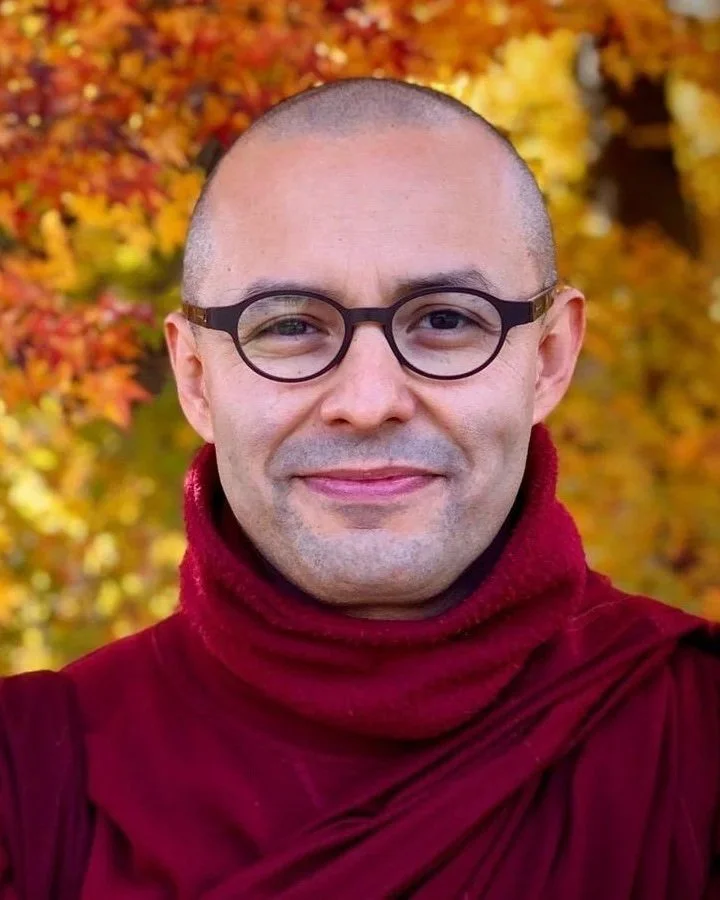
Āyasmā Rāhula
Introduction
Āyasmā Rāhula is a dedicated practitioner and teacher who bridges the profound meditative traditions of Myanmar with a modern, scholarly understanding of the mind. Having lived and practised in Asia for over two decades, he brings a global perspective to the Dhamma. He is particularly recognized for his ability to translate the complex maps of the Abhidhamma (Buddhist Psychology) into practical "anatomy of the mind" courses that resonate with students across the world.
Monastic Training in Myanmar
Āyasmā Rāhula’s monastic foundation was forged in the heart of Myanmar, where he was ordained by the Most Venerable Sayadaw Dr. Nandamālābhivaṃsa, one of the world's leading authorities on Abhidhamma and Pali scholarship.
His training has been defined by two distinct yet complementary pillars:
Awareness Meditation: Since 2004, he has received personal meditation guidance from Sayadaw U Tejaniya at Shwe Oo Min Forest Center, focusing on the cultivation of continuous, relaxed awareness in daily life.
Scriptural Mastery: He studied the Suttas and Abhidhamma intensively under Sayadaw Dr. Ukkamsacara, gaining a deep technical understanding of the Buddha’s psychological framework.
Academic Excellence and Global Teaching
In 2019, Āyasmā Rāhula further deepened his intellectual grasp of the tradition by completing a course on Buddhist Scriptures at Harvard University. This combination of traditional forest practice and Western academic rigor allows him to present the Dhamma in a way that is both authentic and intellectually accessible.
He is well-known for his weekly online courses, "Anatomy of the Mind," which apply Abhidhamma principles to modern life. These sessions are conducted in both English and Spanish, reaching students in more than 15 countries and fostering a global community of practitioners.
Humanitarian Work and SBS Malaysia
Currently, Āyasmā Rāhula resides at the Sasanarakkha Buddhist Sanctuary (SBS) in Taiping, Malaysia, where he continues his training under the guidance of Ven. Ariyadhammika.
Despite his focus on practice, he maintains a strong commitment to social service in South America, where he:
Addiction Recovery: Assists in programs helping society members gain freedom from drug and alcohol addiction.
Educational Campaigns: Supports preventative education to empower the youth against substance abuse.
Propagating Dhamma: Continues to introduce the Buddha’s teachings to the Spanish-speaking world, where the Dhamma is still emerging.
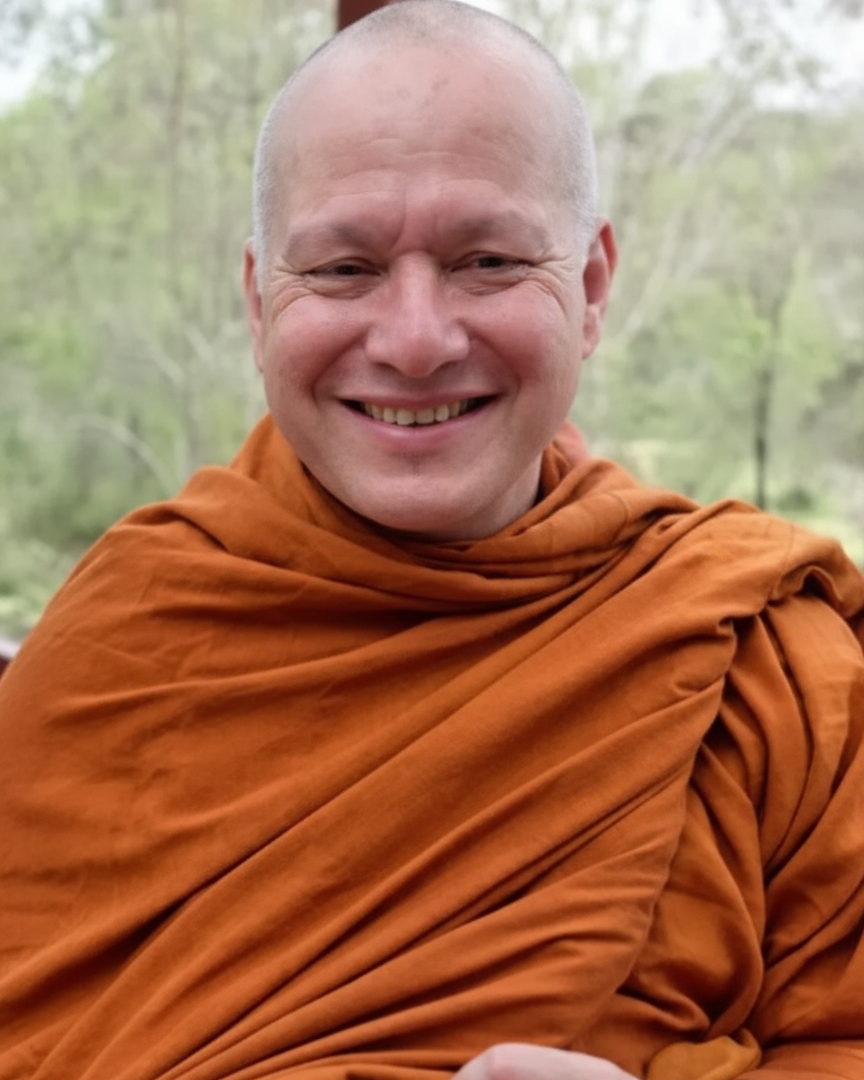
Luang Por Kalyano
Introduction
Luang Por Kalyano is a senior Western disciple in the lineage of the renowned meditation master Ajahn Chah. With over 40 years of monastic experience, he is a pivotal figure in the global expansion of the Thai Forest Tradition. As the founding abbot of Buddha Bodhivana Monastery in Australia, he is widely respected for his unwavering commitment to the monastic code (Vinaya) and his ability to guide lay practitioners toward inner peace through the development of "Stillness and Wisdom."
Early Life and Path to the Robe
Born Daniel Jones in London in 1962, Luang Por Kalyano’s spiritual quest began during his youth. While a student at Bristol University, he encountered the Buddha’s teachings and felt a deep resonance with the Path of Dhamma.
Following the completion of his degree, his search led him to Thailand, where he sought a life dedicated entirely to meditation and renunciation. In 1985, he received full ordination as a Bhikkhu at Wat Nong Pah Pong, the mother monastery of Ajahn Chah’s lineage.
Deep Roots: Training with Ajahn Anan
A defining feature of Luang Por Kalyano’s monastic life is his long and close association with Venerable Ajahn Anan Akiñcano. Ajahn Anan is celebrated as one of Ajahn Chah’s most accomplished meditation disciples, known for his profound mastery of Samadhi (concentration).
Luang Por Kalyano spent many years training under Ajahn Anan at Wat Marp Jan in Thailand. This rigorous apprenticeship provided him with a direct transmission of the forest tradition's values: endurance, meticulousness in practice, and a heart grounded in deep meditative absorption.
Establishing the Forest Tradition in Australia
In the year 2000, Luang Por Kalyano was invited by the Buddhist community in Australia to help establish a forest monastery that would uphold the standards of the Ajahn Chah lineage. This led to the founding of Buddha Bodhivana Monastery in East Warburton, a secluded forest area near Melbourne.
Under his leadership, Buddha Bodhivana has grown from a humble patch of forest into a flourishing center for monastic training. Today, it serves as a vital sanctuary for both local and international monastics, and as a spiritual hub for lay practitioners in the Melbourne region and beyond.
Dhamma Talks recorded in Bandar Utama Buddhist Society on YouTube
Dhamma talks are held following each Puja session every Sunday. Speakers are invited each week to share the Dhamma with members and friends of BUBS. We are blessed to have many Forest Sangha members, locally and overseas offering Dhamma teachings.
The Dhamma Legacy: Bodhipakkhiya Dhamma - Dhamma Talk by Bro. Benny Liow
BUBS Dhamma Talks Podcast on Spotify
A podcast on Spotify of Dhamma Talks in BUBS: https://bubs.my/spotify
Amaravati Podcast Latest Dhamma Talks on Spotify
These are the latest Dhamma Talks given mainly in the Amaravati Temple during the Wan Phras (moon/observance days). These talks include those given during the Winter Retreat, Rains / Vassa retreat and the rest of the year. A complete audio library can be found at https://www.amaravati.org
More Videos: https://www.youtube.com/c/AmaravatiBuddhistMonastery
Mindful Awareness & Serenity Retreat with Ayasma Aggacitta
Sutta Workshops by Āyasmā Aggacitta
This channel was initially created to upload edited video footage of the Satipaṭṭhāna Sutta Study with Meditation Workshop Tour 2012, held in 7 locations in Malaysia and Singapore, and attended by a total of more than 500 people. The Satipaṭṭhāna Sutta (MN 10) is one of the most referenced discourses from the Buddhist scriptures, especially by meditators.
The channel has expanded the scope to include edited video clips of other workshops, Dhamma talks and presentation slides used in events conducted by Āyasmā Aggacitta. For a more structured approach to navigating and appreciating the workshop videos, please view https://satipatthanasbs.com.
Kathina Trip organised by BUBS Fellowship
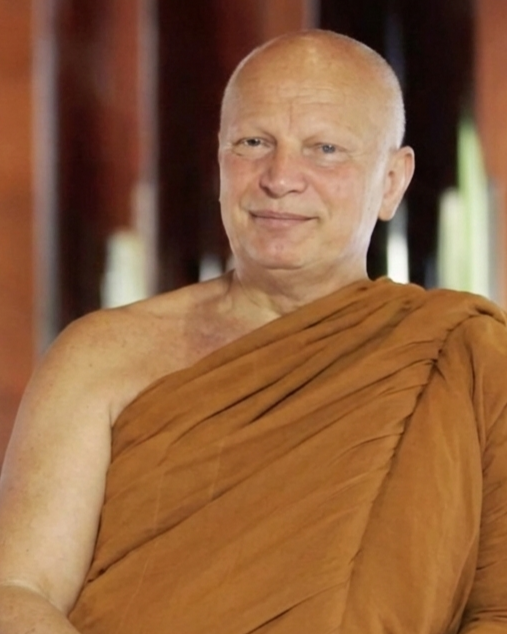
Luang Por Nyanadhammo
Introduction
Most Venerable Luang Por Nyanadhammo is a highly esteemed senior monk in the Thai Forest Tradition and a direct disciple of the legendary Ajahn Chah. With nearly 50 years in the robes, he is recognized for his profound mastery of the Dhamma, his skill in meditation, and his fluent command of the Thai language, which has allowed him to bridge the gap between Eastern forest wisdom and Western practitioners. He currently serves as the Abbot of Wat Ratanawan, a secluded forest monastery located at the edge of Khao Yai National Park.
From Biology to the Buddha's Path
Born in Adelaide, Australia, in 1955, Luang Por Nyanadhammo's spiritual journey began during his university years while studying biology. His scientific inquiry into the nature of life eventually led him to the Buddha’s teachings. Inspired by what he read, he traveled to Thailand in 1978 to seek a more authentic way of living.
He received his novice ordination at Wat Bowon Niwet Wiharn in Bangkok from Somdet Phra Nyanasamvara (the late Supreme Patriarch of Thailand). In 1979, at the age of 24, he received full Bhikkhu ordination from Ajahn Chah at Wat Nong Pah Pong, becoming part of the historic first generation of Westerners to train in the heart of the Northeast Thai jungles.
The Life of a Jungle Monk
Following his ordination, Luang Por spent many years as a wandering monk (Tudong). He traveled to the most remote corners of Thailand, staying in secluded caves and mountaintop monasteries to refine his meditation practice. During this period, he sought out and studied under many of the great living forest masters of the time, absorbing the "Standard" of the Forest Tradition—a lifestyle of relentless mindfulness, simplicity, and endurance.
Leadership and Service
Luang Por Nyanadhammo has held several significant leadership roles within the Ajahn Chah lineage:
Australia (1994–2002): Served as the Deputy Abbot to Ajahn Brahm at Bodhinyana Monastery, where he was instrumental in supporting the growing Australian Sangha.
Wat Pah Nanachat (2002–2007): He returned to Thailand to serve as the Abbot of the International Forest Monastery, guiding a diverse community of monks from all over the world.
Wat Ratanawan (2007–Present): He was invited to lead Wat Ratanawan in Korat province. Under his guidance, the monastery has become a renowned sanctuary for serious practice, known for its strict adherence to the forest way and its deep natural silence.
Two-Day Virtual Retreat with Tan Ajahn Thānissaro and Tan Ajahn Keng
Day 4 - Well-being is the Shape of the Heart
Day 3 - Well-being is the Shape of the Heart
Day 2 - Well-being is the Shape of the Heart
Day 1 - Well-being is the Shape of the Heart
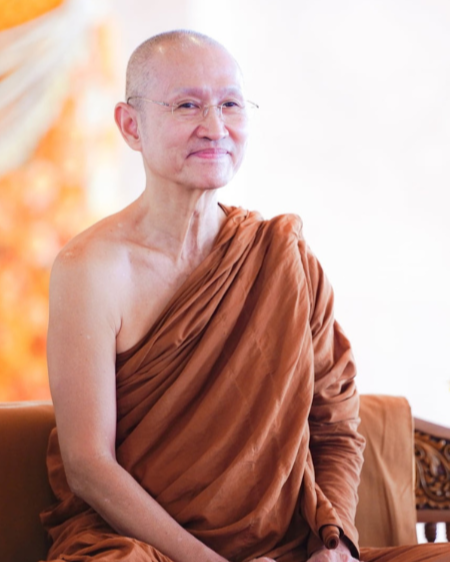
Luang Por Dtun
Introduction
Luang Por Dtun is widely considered one of the most significant living meditation masters in Thailand today. A direct disciple of the legendary Ajahn Chah, he is revered for his impeccable conduct (Sila), his profound meditative insights, and a remarkably gentle demeanor that masks a powerful and unwavering dedication to the Dhamma. His life and teachings serve as a beacon for both monastics and laypeople seeking the path to inner liberation.
Early Life and Renunciation
Born in 1955 in the historic province of Ayutthaya, Luang Por Dtun was raised in the bustling environment of Bangkok. Despite his urban upbringing and his success in academia—completing a Bachelor’s Degree in Economics—he felt a powerful pull toward the spiritual life from a young age.
In his mid-twenties, he chose to leave behind a promising worldly career to seek the truth of the Buddha’s teachings. He traveled to Northeast Thailand to ordain at Wat Nong Pah Pong, where he was accepted as a disciple by Ajahn Chah, who served as his preceptor.
A Reputation for Excellence
Even during his early years as a junior monk, Luang Por Dtun’s practice was a subject of quiet awe among his peers. He was noted for his extraordinary diligence, often spending entire nights in walking and sitting meditation. His fellow monks frequently remarked on the distinct aura of calm and clarity that surrounded him, a testament to his deep concentration and purity of heart.
Under Ajahn Chah’s guidance, he mastered the fundamentals of the forest tradition, emphasizing the integration of strict monastic discipline with the constant investigation of the mind.
Establishing Wat Boonyawad
After years of intensive practice in the remote forests of Thailand, Luang Por Dtun was eventually invited to lead a small hermitage in Chonburi. Under his compassionate leadership, this humble site evolved into Wat Boonyawad, now one of the most prominent and respected training monasteries in the country.
Today, Wat Boonyawad is home to approximately fifty monks. Despite the monastery's size, Luang Por Dtun maintains a rigorous standard of practice, ensuring that the environment remains dedicated to silence, meditation, and the authentic forest lifestyle established by his teacher.
Year End Virtual Retreat with Luang Por Dtun
Online Dhamma Workshop with Ven. Ajahn Kalyano: Pursuing Inner Peace & Joy - Healthy Body, Healthy Mind
BUBS Kathina Donation Disbursement
We are pleased to inform you that through your generosity, we have collected RM 29413.00 in our recent call for Kathina 2021 Donation.
BUBS will top up the donation to RM30,000.00 from our Sangha Dayaka Fund.
With this we are pleased to share that we will be disbursing RM10,000.00 to each of the 3 monasteries/temples listed below:
Sāsanārakkha Buddhist Sanctuary, Taiping Perak
Sri Jayanti Buddhist Temple, Sentul KL
Santi Forest Monastery, Ulu Tiram Johor
Anumodana to all our donors for your generous donation to support the Buddha Sasana. We could not have done it without your support.
Sadhu Sadhu Sadhu.
May the goodness arising from your kindness and generosity be the cause for the arising of favourable conditions that will support your practice.